
 Pachena
By Brenna Matendere
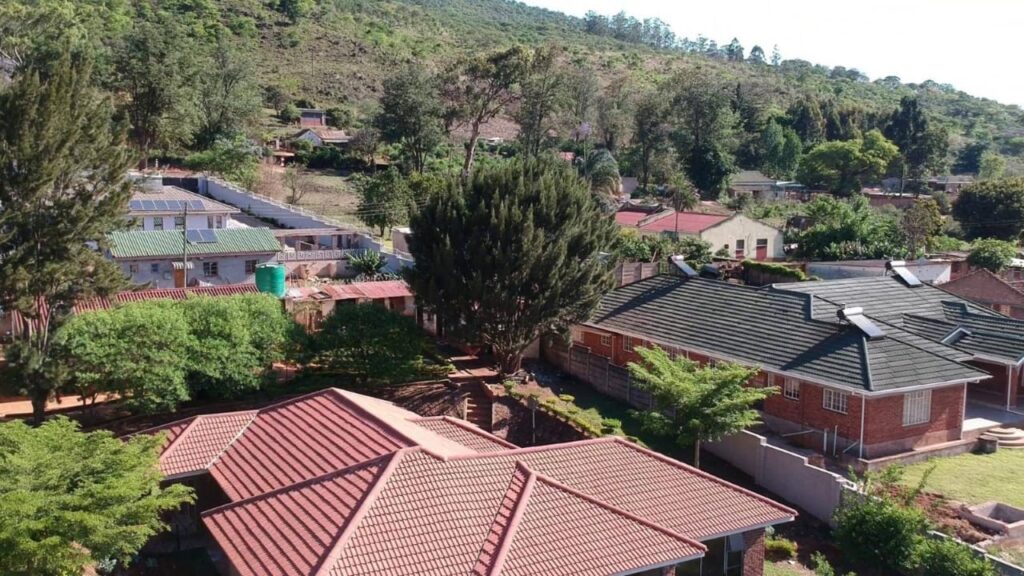
Two mining companies are moving to start a potentially toxic gold mining project which could affect 824 households and up to 10 000 people in the low-density suburb of Managers Hill in Penhalonga, Manicaland, despite a 10-year-old court order stopping mining in the area.
A total of 28 properties are set to be destroyed by the mining venture, with owners receiving compensation.
The companies, Penhalonga Valley Investments (PVI) and The Mining Portfolio (Pvt) Ltd (TMP), are being supported by the Mutasa Rural District Council (MRDC), which previously fought off the mining venture.
The companies, however, lack approvals from the Environmental Management Authority (EMA).
Residents and civil society organisations are resisting the moves, which they argue violate their property rights while exposing them to health hazards.
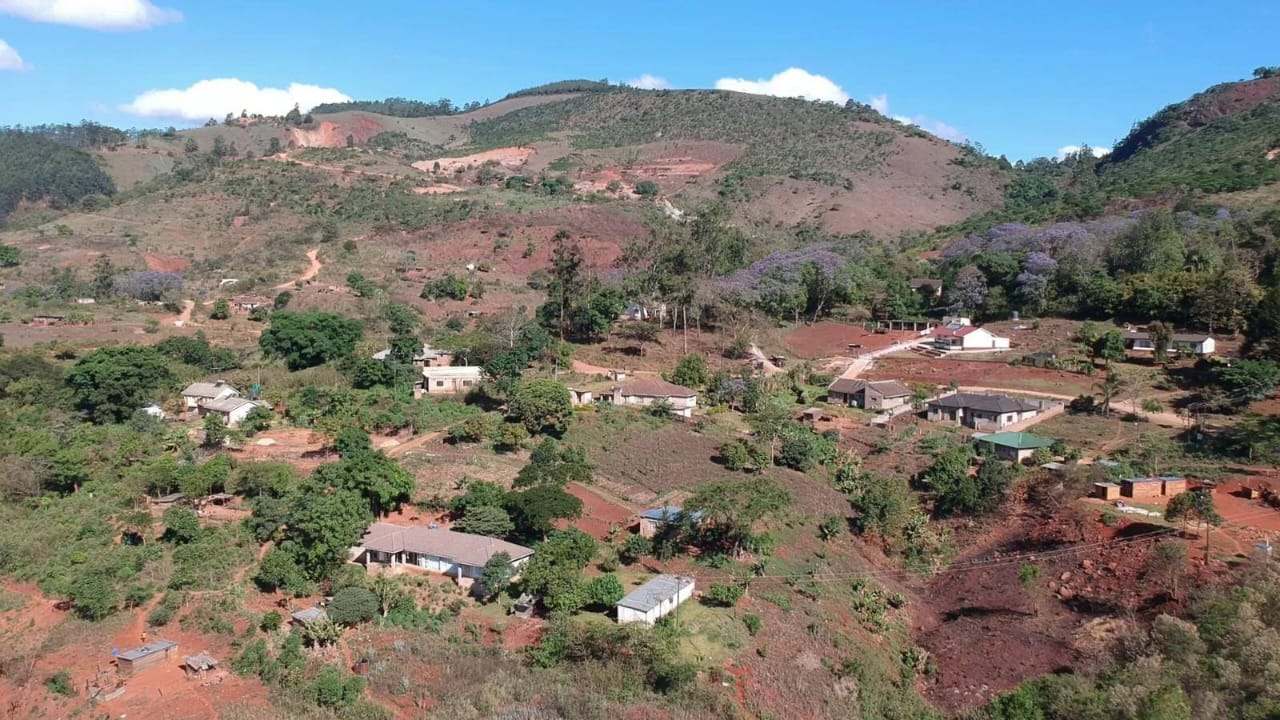
A Pachena investigation found that the local authority and the Manicaland provincial mining office have cleared the way for PVI and TMP to extract gold from a century-old mine dump on which houses now stand.
The companies are also planning to build a tailings storage facility – a dam that holds mine waste – on the slope above the homes.
Ironically, in 2015 the MRDC resisted the venture and engaged the police to stop mining in the area.
The suburb was created with the full support of the Ministry of Local Government, which oversees the operations of the local authority.
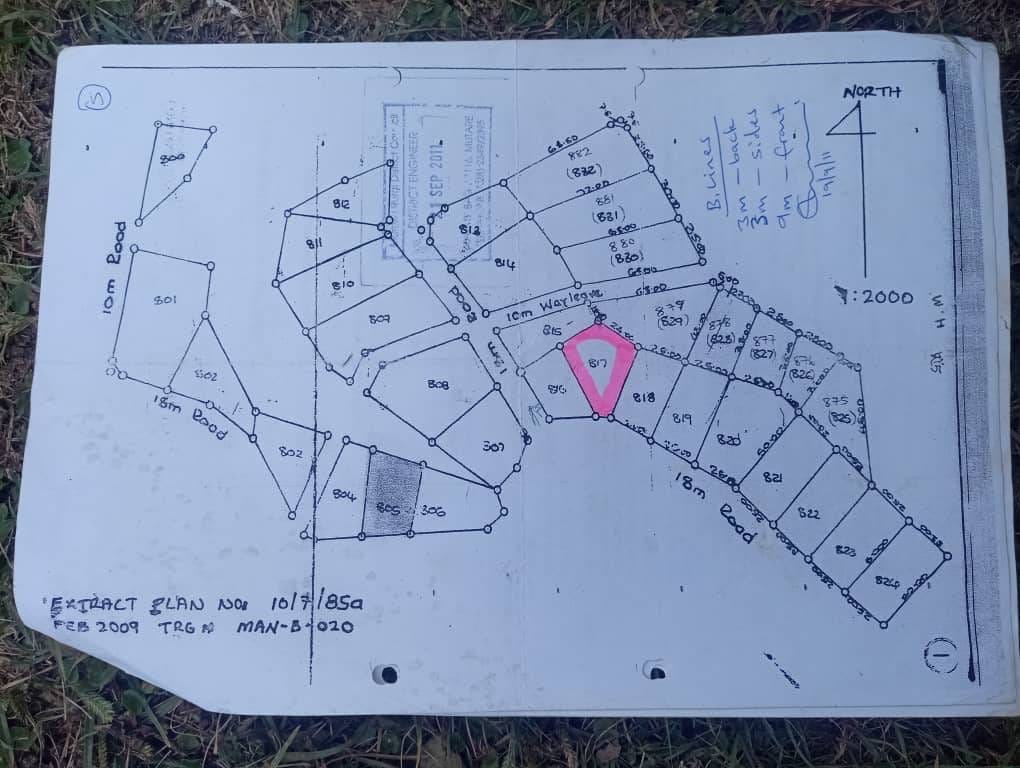
Pachena established that the Department of Physical Planning drew up the Penhalonga Low Residential Layout Plan, which was approved by the then Minister of Local Government, Ignatius Chombo, in 2006, paving the way for the land to be gazetted for housing. MRDC sold the stands from 2006 and allowed owners to construct homes.
TMP, which is mining at Penhalonga Valley Mountain, formerly known as Coldon Mine, has since sampled the old dump and found gold.
The company wants to reprocess the gold dump in partnership with PVI, which holds the historical claim. TMP will fund the operation.
However, residents say a public notice of the companies’ intention to mine was not issued.
They also say an application to change the land use was not advertised.
Residents with homes in the windward direction from the planned project say they were not consulted.
The residents say notifications were also not issued in the Government Gazette and local newspapers to call for objections to the project.
Mutasa Rural District Council chairperson, Pardington Nemaunga, conceded that the council had not advertised in the Government Gazette and local newspapers to call for objections.
He, however, insisted residents were consulted during a meeting held at Penhalonga Country Club on June 4, 2025.
Nemaunga also conceded that there are no minutes regarding the change of land use.
“This issue was handled by technocrats from council, but we did not have a full council meeting on it,” he said.
“I promise to physically visit the affected area for my own fact-finding mission, because I was not aware there are people who are not happy about the change of land use. From what I had been told, everyone was happy with the arrangement.”
Homes built on a gold dump
Penhalonga has lived off gold for well over a century. Colonial-era companies began mining there in the 1890s, and the waste they left behind includes the dump now at the centre of this dispute.
PVI, which was incorporated under Company No. 15122/2002 on 18 November 2002, with John Chinonzwa as a director, held a licence to mine on Manager’s Hill.
Its claim was lying idle, prompting the authorities to change its land use to housing, according to an official at the provincial mining directorate.
Although it could not be ascertained whether the company was at one time deregistered, documents obtained at the company registry office show that the company was re-registered on 10 March 2025 under entity number 35621A0332025 with the directors listed as John Chinonzwa, Sara Chinonzwa, Dannymore Chinonzwa, Lovemore Chinonzwa and Innocent Chinonzwa.
The company has revived its long-held interest in the gold-rich hill, leading to clashes with residents.
‘There can never be clean tailings’
Joel Dzveta, who chairs the Penhalonga Low Residential Area Committee (PLRAC), said residents have not changed their opposition to the mining project.
“The position of the residents has been and remains a no to co-existence with a dumpsite,” he said.
“We made our position clear to the Minister of State, the local authority, the district development coordinator’s office, the Ministry of Mines and EMA. We were promised that all stakeholders will present reports to the minister and then we will be invited to argue our case.”
All work on the dump, he said, had been ordered to stop by the Manicaland Minister of State for Provincial Affairs and Devolution, Misheck Mugadza, during a June 4, 2025 meeting with residents at Penhalonga Country Club.
“However, we hear that some residents have had their properties visited for valuation. There can never be clean tailings. Nowhere in the field of mining have there been clean tailings. The area is a residential area and there has never been a change of land use advertised,” Dzveta said.
The objections are documented.
On May 9, 2025, the residents’ committee wrote to the Provincial Mining Director for Manicaland, Engineer Sibongubuhle Mpindiwa, demanding the “urgent cessation” of the dump and all mining development in the area.
“The proposed site for the mine dump is less than three metres from the first line of residential area,” the letter reads.
“The site is also in the windward direction and poisonous dust emissions from the tailings will directly impact 824 households and businesses within a population of 10,000 people.”
It warned of air pollution, heavy metals in the soil, damage to farming, respiratory illness and collapsing property values, and said a further 15,000 people in Tsvingwe and surrounding farms would be exposed to dust.
The letter, signed by the PLRAC deputy chairman, Phillip Maneswa, was copied to, among others, the Officer Commanding Police in Manicaland Province, Commissioner Charles Nhete; the Department of Physical Planning; the commander of 3.1 Infantry Battalion; and the Minister of State for Manicaland, Misheck Mugadza.
Mpindiwa declined to comment.
Mines and Mining Development Minister Polite Kambamura did not respond to questions.
Residents’ fears are rooted in what they see nearby.
In Tsvingwe and the Redwing Mine compound, they say, people have long suffered pneumoconiosis and tuberculosis linked to dust from mine tailings.
Citing Section 73 of the Constitution, which guarantees everyone an environment that is not harmful to their health or well-being, they say the new facility will expose them to airborne silica and hydrogen sulphide, which are associated with silicosis, an untreatable disease, and lung cancer.
Mugadza, who is also MP for Mutasa South, which covers Penhalonga, denied any wrongdoing in a recent interview with Pachena.
“There is a dump there from long back. Houses were built on a gold dump,” he said.
“The companies in question (PVI and TMP) came to us and said they will rehabilitate the dump and we agreed. That is why families are being moved.
People from 28 families were engaged and told to vacate. Government evaluators have already visited the area. We are waiting for the results of their evaluation so that people can be compensated.”
Residents living further away, he said, would have to wait for their concerns to be addressed. “Those that are far, their issue will be resolved later, after compensation to the immediately affected families. Mutasa RDC, EMA and the mining ministry are in discussions.”
A council that changed its mind
The company previously faced resistance to its mining endeavours, including from the local authority.
The local authority’s position was made clear when a resident complained that PVI’s mining activities had encroached into the residential area that is now being turned into a mining zone.
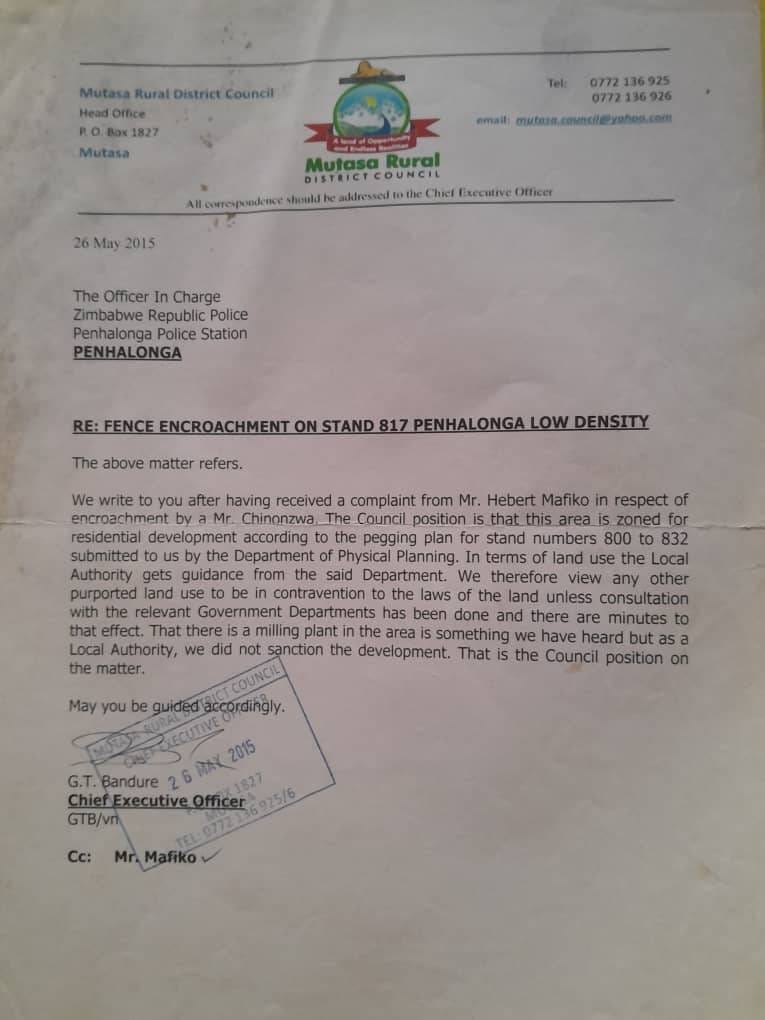
On 26 May 2015, MRDC chief executive George Tonderai Bandure wrote to the officer in charge of Penhalonga Police Station, reporting that PVI had encroached on stand 817.
“The council position is that this area is zoned for residential development according to the pegging plan for stand numbers 800 to 832 submitted to us by the Department of Physical Planning … We therefore view any other purported land use to be in contravention to the laws of the land use unless consultation with the relevant government departments has been done and there are minutes to the effect.”
Ten years later, the same council, still led by Bandure, has opened the door to the very land use it once asked the police to stop.
Manicaland provincial police spokesperson Inspector Wiseman Chinyoka said there were new officers at the Penhalonga Police Station and therefore it was difficult for them to ascertain what happened to the case since it had been reported in 2015. He said that although they had perused the records, they had not been able to establish how the case was concluded.
Pachena sent Bandure written questions on 20 August 2026, attaching his 2015 letter, and asked him to explain the council’s change of position. He has not replied. He has also failed to answer repeated phone calls.
Ward 21 councillor, Kassim Wabu, whose area covers Penhalonga and Tsvingwe, said he was not aware of the project.
“We never discussed it at council. You are the first person to talk to me about this issue of mining in this residential area,” he said.
He blamed the wider disorder on politics. “This issue of gold mining is now becoming a problem in Penhalonga. We have amakorokoza(artisanal miners) digging wherever they want in the name of the ruling party (Zanu PF).”
A court order still on the record
One resident has already been to court, and won.
On 18 September 2015, in case number 931/2015, Mutare magistrate Yeukai Chigodora granted Herbert Mafiko, the owner of stand 817, an interdict barring Chinonzwa from vandalising his property or interfering with its development.
Chinonzwa had argued that the stand lay inside his gold claim. He told the court he had applied to the High Court to have the area declared unfit for human habitation. The magistrate was not persuaded.
“I am convinced the Applicant has a clear right over the property as he is a bona fide purchaser,” she ruled. “Pending the outcome of the High Court matter … the status quo must remain. Applicant must enjoy undisturbed occupation of his property.”
No higher court has overturned the ruling. Chinonzwa appealed against the magistrate’s ruling at the Mutare High Court on 28 September 2015 under case number CIVA 425/15, citing Mafiko as the sole respondent.
On 12 July 2016, the High Court threw out the appeal through a judgment by Justices Alphas Chitakunye and Erica Ndewere that reads:
“Whereupon, after reading documents filed of record and hearing Counsel, it is ordered that the interim order granted by the court a quo in case no 931/15 be and is hereby extended…”
EMA, which must approve the project before it can go ahead, has not yet given the green light.
The agency’s principal officer for environmental education and publicity, Liberty Mugadza, confirmed in August that the companies had lodged an application.
“At the office we have an application for the tailings project intended for Penhalonga,” he said. “We have not yet read what they are proposing. We have not made consultations on whether it will pass or not. We are at application stage.”
If residents strongly object, he said, a project of this kind cannot proceed.
“As part of reviewing the application, we will consult community leaders to gather their views on whether the project can be permitted, but we are yet to reach that stage.”
So if the regulator has not read the proposal, has consulted nobody and has issued no licence, on whose authority were pegs driven into private gardens?
Mugadza said the Environmental Management Act does not say whether pegging and valuation must come before or after approval.
“Things like pegging and valuation are beyond our scope of responsibilities, but the project cannot proceed without our approval,” he said.
Pachena asked the Ministry of Local Government and Public Works whether its valuers had assessed homes on Manager’s Hill, under what legal instrument, and whether it had reversed the gazetted layout plan.
Gabriel Masvora, the ministry’s director of communications, did not answer the questions directly, although he acknowledged the dispute.
“The Ministry of Local Government and Public Works is aware of the dispute concerning a portion of land in the Penhalonga Low-Density area,” he wrote.
“We understand that discussions are currently underway between Mr Chinonzwa, Penhalonga Valley, the local council and the affected residents to find an amicable way forward. The Ministry is awaiting the outcome of these engagements.”
What the law says
The Regional, Town and Country Planning Act does not allow a gazetted residential layout to be converted at an official’s discretion. Section 24 states that “no person shall carry out any development” unless it is permitted by a development order or carried out under a permit.
Breaching it is a criminal offence, punishable by a fine of up to level seven, up to six months in prison, or both.
Paidamoyo Byrne Saurombe, a human rights lawyer and head of litigation and alternative dispute resolution at Chikuni Associates Legal Practitioners, said working the dump in defiance of the 2015 interdict would be unlawful.

“Once a court order is issued, it ought to be respected, and if a court order is not respected, that is actually contempt of court,” he said.
“Our courts are empowered, where contempt is confirmed, to order arrests or fines. If the procedures provided by the Regional, Town and Country Planning Act were not followed, a judicial inquiry ought to take place, and before that, the interdict, as long as it is extant, must be respected.”
International standards point the same way.
The Global Industry Standard on Tailings Management, drawn up after the 2019 Brumadinho Dam collapse in Brazil killed some 270 people, aims for zero harm to people.
It requires operators to classify facilities by the consequences of failure for the people living nearby and to engage meaningfully with affected communities.
The standard, backed by the International Council on Mining and Metals, the UN Environment Programme and the Principles for Responsible Investment, is voluntary.
TMP describes itself as an ethical company working to international best practice, with one of the most high-tech and environmentally responsible reduction facilities in Zimbabwe.
The company wrote to residents on May 25, 2025, to allay fears that its operations would harm them.
“PVI/TMP will NOT dump waste rock within the tailings site … What will be deposited is a clean, washed paste, free of all chemicals and toxic minerals … Dust from the upgraded and rehabilitated site will be minimal; dust will be suppressed and certainly NOT toxic,” the company wrote.
Harry Greaves, TMP’s managing director, was dismissive when Pachena called for comment.
“I am very far away and do not want to talk a lot,” he said. “However, from your question I can see that you are speaking from an uninformed point of view. That area is a mining zone for several years.”
He referred Pachena to Chinonzwa and to lawyers at Manokore Attorneys, then declined to answer written questions. Asked whether he needed more time, he replied: “No, because you are poorly informed.”
Chinonzwa, speaking by telephone, insisted that residents supported the project.
“The residents in the area and their committee are happy that we want to establish that in the area. Everything is above board,” he said. “I have no answers to your other questions. You can write what you want. I have no obligation to answer anything about whether I have a licence because I am not accountable to newspapers.”
‘An industrial waste facility’
James Mupfumi, director of the Mutare-based Centre for Research and Development (CRD), said the companies’ reassurances did not stand up to scrutiny.

“A TSF remains an industrial waste facility and its location within a residential area is completely unacceptable,” he said.
He believes talk of rehabilitating a century-old dump masks a commercial motive, “especially in light of reports that TMP sampled the site and identified commercially valuable gold”.
Pegs in the front garden
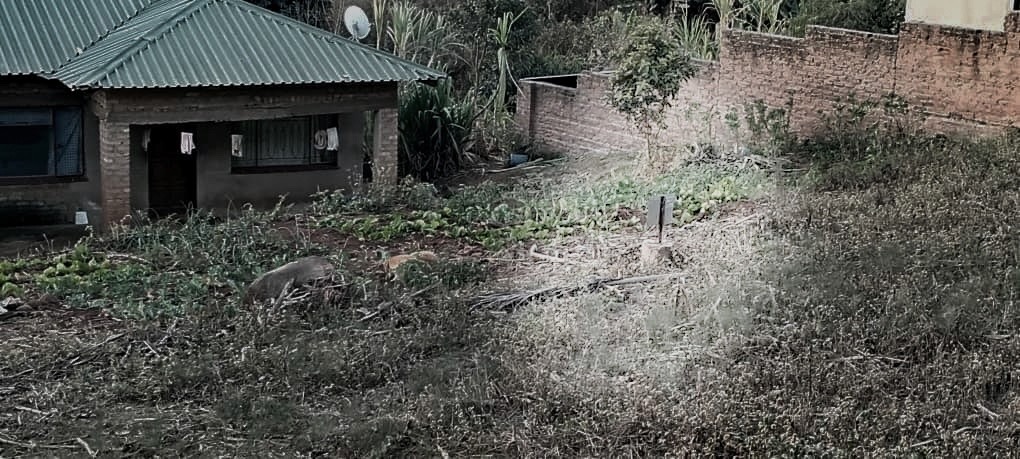
When Pachena visited the area recently, the pegs were already in: concrete blocks capped with a metal plate, set into lawns and driveways, some a step or two from front doors.
Investigations revealed that PVI made payments to the Manicaland offices of the Ministry of Mines and Mining Development to work on the site.
A receipt dated 7 May 2025 under invoice number 116865 shows PVI (Pvt) Ltd paid US$750 for what is described as “Head Gear Commissioning/ Penhalonga East A”.
In Zimbabwe, headgear commissioning by provincial officers of the Ministry of Mines and Mining Development refers to the official inspection, safety verification and legal approval of a newly installed or upgraded mine-shaft headgear – the tower structure above an underground shaft used for hoisting personnel, equipment and ore – before it is permitted to begin operating.
The process is conducted by provincial mining officers—specifically Regional Mining Engineers and Inspectors of Mines working under the Provincial Mining Director (PMD).
Another receipt dated 21 March 2025 shows that PVI paid ZiG13 460 (US$448) for what was described as site rental.
Yet another receipt dated 5 August 2025 carrying receipt number 081825 shows that John Chinonzwa paid US$2 400 for what was described as “inspection fees” for the site for four quarters of the year.
Most homeowners would speak only if they were not named. The mood on the hill is tense, they said, and word has gone round that PVI says anyone who resists the removals will lose their compensation.
“There are officials who came three weeks ago and said they were from Mutasa Rural District and the Ministry of Mines,” said a retired civil servant. “They verbally informed me that I will lose my home because the area is now a mining zone, before they sunk a peg right in front of my front door without my consent.”
Another resident, an informal trader who built her house in 2012 from family savings, said a second group had arrived, calling themselves government valuers.
“They said they were evaluating the properties and took some notes, but did not disclose anything more,” she said.
“The problem is that there is now intimidation, with threats that anyone who resists moving will lose both their home and compensation. The whole issue is about disregard of property rights and the lawlessness that generally happens here in Penhalonga.”
Morris Chakawa has lived about 200 metres down the road from the planned dump for ten years. His wife has asthma.
“From what we are experiencing from old mining dumps, fine dust will blow into our houses and this causes breathing problems, especially for those with asthma,” he said. “Toxic chemicals seep into the soil, contaminating our boreholes. It lowers the value of our properties, since no one wants to buy near a dumpsite. It’s also a danger to residents when the site collapses,” he said.