 Pachena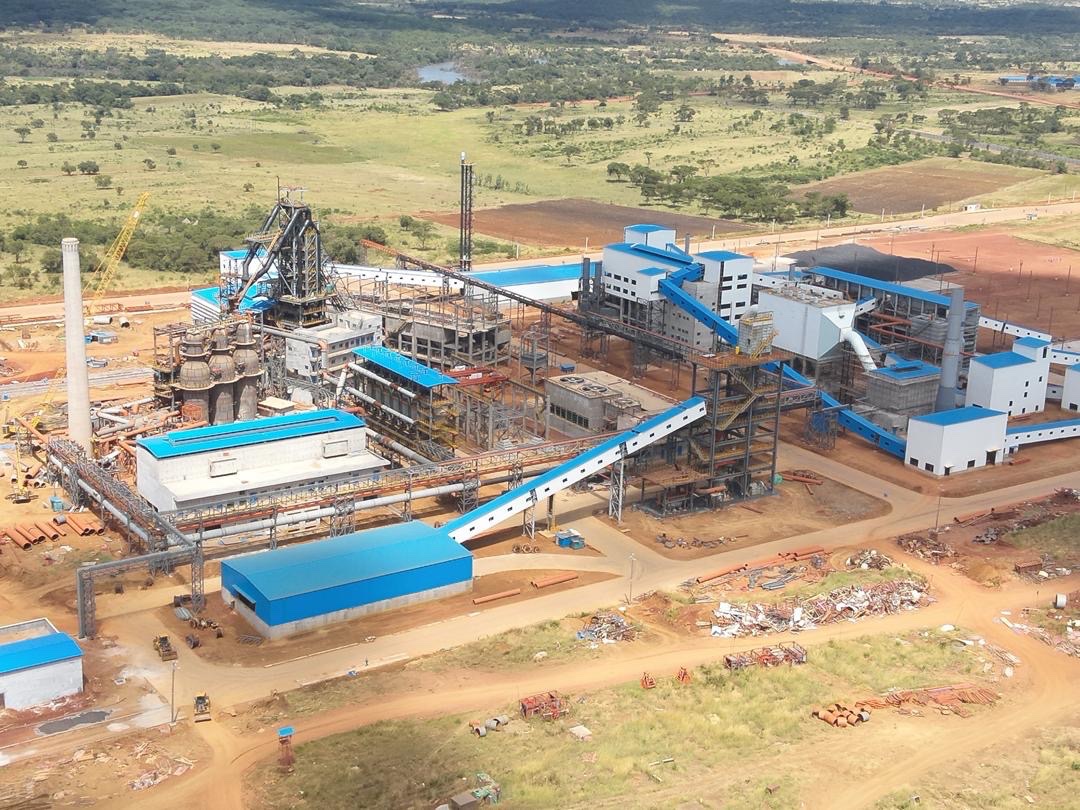
THREE years after China’s Dinson Iron and Steel Company set up a US$1.5 billion plant in Manhize with grand promises to revive Zimbabwe’s collapsed steel industry and transform local communities, an investigation finds that blast furnaces remain cold, exports flow to China and South Africa, and villagers go months without food allowances.
By Brenna Matendere
When hundreds of abnormal-load trucks rolled through Zimbabwe’s roads between July and September 2022, ferrying Chinese industrial equipment from the Durban Port, South Africa to a sprawling new plant in Manhize, Midlands province, the expectation was transformative: a US$1.5 billion Chinese-backed steel complex that would breathe life back into an economy long hollowed out by deindustrialisation. Three years on, a months-long investigation by Pachena tells a starkly different story.
Dinson Iron and Steel Company (DISCO), a subsidiary of China’s Tsingshan Holding Group, one of the world’s largest stainless steel producers, has failed to deliver on its central promise: to supply raw materials that would revive Zimbabwe’s once-mighty downstream steel industry, including the long-shuttered Zimbabwe Iron and Steel Company (Ziscosteel) in Redcliff and Lancashire Steel in Kwekwe. Instead, the plant is exporting the bulk of its output to China via South Africa while local communities in Manhize live without the schools, clinics, clean water and reliable allowances they were promised when they gave up their land.
An Industry Still Waiting
The promises were unambiguous. On 10 May 2025, Industry Minister Nqobizitha Mangaliso Ndlovu told parliament that DISCO’s arrival presented “a unique opportunity to build synergies with the existing Zisco plant and other downstream industries such as Lancashire Steel.” He was direct: “Our focus is to make sure that the capacity that was lost at Ziscosteel, which was the primary conversion of iron ore into steel, is regained through Dinson.”
Days later, on 13 May 2025, DISCO Project Director Wilfred Motsi went further in a radio interview, outlining a commercial arrangement under which DISCO would supply Zisco with the raw materials it needs to resume production. “What we have discovered is that Zimbabwe Iron and Steel Company does not have the raw material which we’re producing,” Motsi said. “And they have got lines of production which are still intact, whereby we are saying, we will give you the raw material, but on a market basis.”
The case for such a deal is technically sound. The Manhize plant produces pig iron, steel billets and wire rods — precisely the intermediate products Zisco requires to restart its production lines. DISCO’s colliery in Hwange, Matabeleland North, produces up to 700,000 tonnes of coke per year — the fuel critical to blast furnace operations. On paper, the two operations were made for each other.
In practice, this investigation found all of Zisco’s blast furnaces cold and switched off. The company, which at its peak in 1990 produced 1.2 million tonnes of steel annually, employed 4,500 people and contributed an estimated US$1 billion to Zimbabwe’s GDP, has not manufactured a single steel product since its collapse in 2008. To cover basic expenses, it sells small quantities of scrap iron and quarry stone.
The cost of Zisco’s paralysis extends beyond industrial output. As of October 2025, Zisco owed the Redcliff local authority US$14,990,848.98 in unpaid rates on its properties- houses, offices and a sports club- in the small steel town that grew up around it. That debt represents 60 percent of the council’s total annual revenue.
“It’s affecting us in terms of service delivery,” said Redcliff Mayor Vincent Shangwa Masiiwa. “We are operating without the 60 percent every month and we are also not getting 100 percent of the 40 percent remainder, so our revenue inflows are very low.”
Meanwhile, Zimbabwe imported US$256.35 million worth of steel in 2023- a year after the Manhize plant was established- with South Africa accounting for US$170 million and China US$86.6 million of those imports, according to the United Nations COMTRADE database. Projections for 2024 pointed to similar levels. The country’s own steel plant was shipping product in the opposite direction.
When Pachena put these findings to Dosman Mangisi, Chief Operations Officer of the Zimbabwe Institute of Foundries (ZIF), he did not mince words. “Collaboration cuts the cost of doing business for Zisco as they will not need to import raw materials for their revival. Dinson can provide pig iron to roll into steel and also steel billets. The collaboration is very important for the industry,” he said.
Authorities at Zisco declined to elaborate on the touted partnership. Spokesperson Ezekiel Machingambi said he was “not able to assist,” while board chairperson Engineer Martin Manuhwa cited a “strategic planning process” as reason for not speaking to the press.
The man widely credited with facilitating DISCO’s arrival in Zimbabwe, former ambassador to China and ZANU PF spokesperson Christopher Mutsvangwa, showed little appetite for accountability. When asked why the Manhize plant appeared to be benefiting South African and Chinese companies more than Zimbabwean industry, he said: “What has that to do with me… I do refer you to downstream steel industry players. Please do not be lazy- ask them. Ask them why they are losing out to African Continental Free Trade Area (AfCFTA) fellow competitors.”
Villages Left Behind
Seventy kilometres from the political arguments in Harare, the community of Mushenjere village tells a more intimate story of broken promises.
A letter written in Shona, compiled by Mushenjere villagers and sent to DISCO management on 27 November 2024, catalogued 13 grievances against the company — three years after it moved in. First among them: unpaid monthly allowances of US$200, which the company had promised to compensate families whose farmlands it had occupied. The letter demanded the arrears be paid and the amount increased to US$500.
The grievances continued: no tapped water in homes despite promises, no electricity, no dip tank for community livestock, no school for children, no clinic. Villagers asked for food and digging equipment to be provided at funerals. They demanded US$1,500 for each grave disturbed by the company’s construction. They wanted a 10 percent stake in mineral revenues. They demanded that open mining pits- where community cattle and goats were being trapped- be reclaimed.
This investigation visited both Mushenjere village and Sable Farm, where relocated families now live. In Mushenjere, there is no school or early childhood development facility. Children walk three kilometres to the nearest primary school; ECD-age children have stopped attending altogether. There is no dip tank, no clinic and no electricity in new houses built for relocated families.
“Sometimes we can go for four months without being paid the US$200 which should compensate us for lost land that we depended on for food. Their graders destroyed the fields we had cultivated for decades. During the dry seasons, heavy mining activities by Dinson cover the village with dust and toxic fumes which pose a health risk,” said villager Marvelous Nyika.
The loss cuts deeper than livelihoods. Graves of community ancestors now lie enclosed within DISCO’s boundary walls, beyond reach for the cultural rituals that govern Shona spiritual life. “We are no longer allowed to access these graves for cultural rituals, causing deep emotional and cultural distress to us. We now fear that the graves of our loved ones will be vandalised or neglected,” said Norest Mutirori.
At Sable Farm, conditions are equally grim. Four families have been resettled from their original land, but the borehole supplying their water was drilled below the toilet block, raising contamination concerns. The borehole itself is two kilometres from the nearest homes, a prohibitive distance for the elderly.
More than 800 families who received land under Zimbabwe’s Minda Mirefu communal land allocation programme 41 years ago face potential displacement as DISCO’s operations expand. Thirty-four families have already been notified of pending relocation to smaller plots.
James Mupfumi, director of the Centre for Research and Development (CRD), said this approach violates both Zimbabwe’s constitution and international norms. “It threatens food security and undermines the ability of families to sustain their livelihoods. The land tenure system has effectively become a tool of exclusion, pushing traditional farming communities to the margins of large-scale mining investments,” he said, citing constitutional protections covering property rights, dignity, shelter and environmental rights, as well as the UN Guiding Principles on Business and Human Rights on Free, Prior and Informed Consent.
Promises Left Unanswered
Other commitments have also quietly lapsed. In June 2022, DISCO’s senior manager Bai Johnson told a visiting government minister that the company planned to build both a dedicated power line and a railway connecting Manhize to Masvingo for export logistics. Neither has materialised. National Railways of Zimbabwe spokesperson Andrew Kunambura confirmed that no agreement exists: “The project is yet to secure financiers.”
Written questions submitted to Project Director Motsi in January 2025 went unanswered despite follow-ups across seven days and repeated deadline notifications. He is still to respond.
The Chinese Embassy in Harare, for its part, offered a different view. In January 2025, Chinese Ambassador Zhou Ding posted on social media that in “just five years, this iconic China-Zimbabwe cooperation project has evolved from promise into tangible progress- a powerful testament to our shared commitment.” The ambassador cited 2,000 jobs created and “community-focused initiatives — building schools, drilling boreholes and rehabilitating local roads.”
The communities of Mushenjere and Sable Farm have seen none of it.
DISCO’s parent company, Tsingshan Holding Group is headquartered in Wenzhou, China. It has operations across Indonesia, India, Argentina, Mozambique and the United States employing over 185,000 people worldwide. It reported annual revenues of approximately US$54 billion in 2023. In Zimbabwe’s Manhize, the company produces around 600 tonnes of steel per day, with a Phase One target of 600,000 tonnes annually. Where that steel goes, and who benefits, remains the question the country is still waiting to have answered.
•Pachena contacted DISCO for comment. Project Director Wilfred Motsi acknowledged receipt of written questions in January 2025 but did not provide responses despite multiple follow-ups.