 Pachena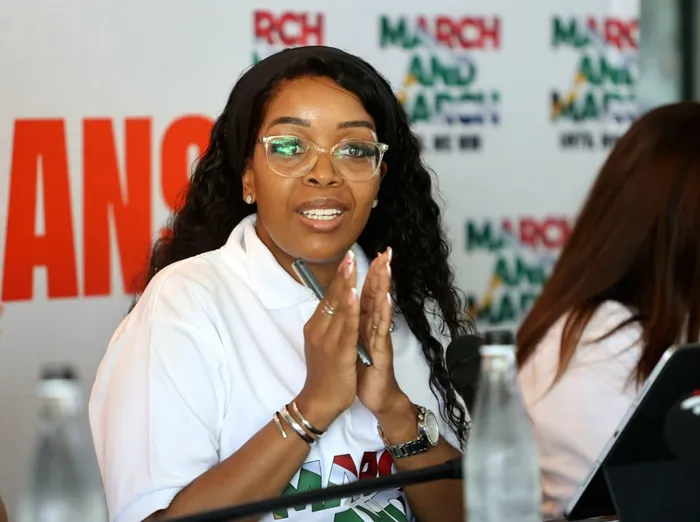
By Brenna Matendere
The South African firebrand whose movement has terrified African migrants has a blunt warning for Zimbabwe’s president: leave power in 2028, or end up like the man you helped overthrow.
In a recent exclusive interview with Pachena from her Durban base, Jacinta Ngobese-Zuma — leader of the anti-immigrant vigilante group March and March — urged President Emmerson Mnangagwa to honour his constitutionally mandated two-term limit rather than cling on and risk the fate of African strongmen who overstayed.
“I think as a president, he really needs to look at himself and hear what the people are saying,” she said. “If they are saying they don’t want him to come back for 2030, then he mustn’t come back.”
Ngobese-Zuma drew a direct line to the late Robert Mugabe, toppled by a military-assisted coup in November 2017 — the very upheaval that carried Mnangagwa to State House. By overstaying, she argued, Mnangagwa risks the same humiliating exit.
“He (Mugabe) did an interview promising the people of Zimbabwe that he would not come back for a third term, because he saw the likes of Robert Mugabe staying in power even when they should have left,” she said. “And he’s doing exactly the same thing now. Our African leaders must stop being dictators.”
Her intervention is striking given her own record. March and March stands accused of fuelling xenophobia against fellow Africans, and is among the organisations that have set a 30 June 2026 deadline for undocumented foreigners — many of them Zimbabwean economic migrants — to leave South Africa, stoking fear across migrant communities and a diplomatic headache for Pretoria.
Yet Ngobese-Zuma laid the blame for that very exodus at the feet of Zimbabwe’s leadership, pointing to the mismanagement of a resource-rich nation.
“If there’s poverty in your household, then surely the problem is with you as the government, because Africa is so rich in minerals. Zimbabwe has so many mines, so much potential. It used to be one of the most beautiful countries in the whole African continent.”
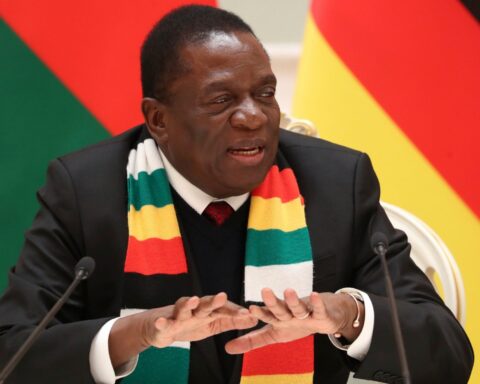
The remarks land at a charged moment. Zimbabwe’s National Assembly has passed a bill extending presidential terms from five to seven years — a change that would keep Mnangagwa in office until 2030. Some 216 MPs backed the legislation, clearing the 187 needed for a two-thirds majority. Forty-two Citizens Coalition for Change lawmakers opposed it, though 35 others sided with the government.
The bill now heads to the Senate, where it is expected to pass as Zanu PF effectively controls the upper house through traditional leaders and other proxies. The opposition holds fixed seats there, but if Zanu PF wins enough of them over, the two-thirds threshold is within reach.
Even then, constitutional lawyers warn the manoeuvre may founder. Any amendment extending term limits would require a referendum — and, crucially, cannot benefit a sitting president.
The obstacle is Section 328 of the constitution, reinforced by the Constitutional Court’s 2021 ruling in Mpungu v Minister of Justice and Others. In that case, judges Rita Makarau and Bharat Patel struck down an extension of then-Chief Justice Luke Malaba’s tenure and held that term-limit extensions cannot apply to incumbents.
The court found that a president’s five-year term falls squarely within Section 328’s protections, meaning any extension cannot apply to a person already holding the office before the change took effect.
Former Mutare Central MP and seasoned lawyer Innocent Gonese has echoed that reading, arguing the framers deliberately designed Section 328 to stop term limits being stretched to benefit those already in power — reserving any extension for future officeholders.
Activists and liberation-war veterans have already mounted court challenges against the extension plan, only for the cases to be struck off the roll on technicalities.
Mnangagwa, once among Mugabe’s closest lieutenants before their bitter fallout, has publicly insisted he will respect the two-term limit. Whether he does — and whether the courts let him do otherwise — may define both his legacy and the warning Ngobese-Zuma has now placed at his door.