 Pachena
…EMA rejected the City of Harare scheme because the land was a wetland, before two cabinet ministers stepped in, Court papers reveal
By Brenna Matendere
Two cabinet ministers overruled Zimbabwe’s environmental watchdog to open the Borrowdale West wetland to upmarket housing development, court papers show, in a damning disclosure indicating how political authority has facilitated the decimation of the country’s ecologically sensitive areas while compromising future water supply.
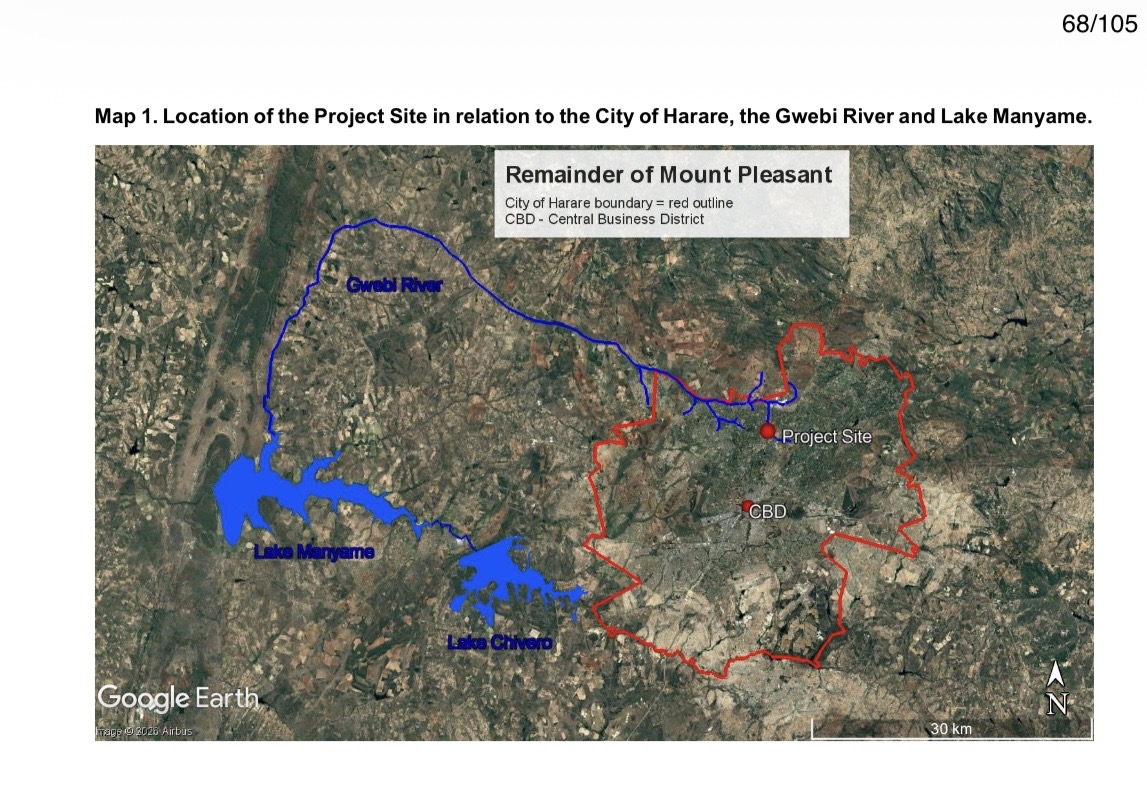
The Borrowdale West wetland is the source of the GwebiRiver, which supplies Lake Manyame, one of Harare’s major sources of water.
Court papers in the matter between BirdLife Zimbabwe and prominent human rights lawyer Beatrice Mtetwa versus the City of Harare and its representative Everson Luni, the Environmental Management Agency (EMA) and its director general Aaron Chigona, the Minister of Environment, Climate and Wildlife Evelyn Ndlovu as well as the Minister of Local Government and Public Works Daniel Garwe, reveal that EMA turned down a request to build on the wetland in 2021.
The environmental emergency was however vetoed by then Environmental minister Mangaliso Ndlovu after an appeal by then Local Government minister July Moyo, paving way for development on a large section of the wetland.
BirdLife Zimbabwe and Mtetwa are fighting the development, which they argue has also spread beyond the portioncontroversially approved by the ministers. Construction has moved onto plots EMA had expressly refused to release.
The applicants won the first battle at the beginning of the month, when the City of Harare and Everson Luni, named on the project’s environmental licence gave an undertaking before High Court judge Justice Pisirayi Kwenda that all development works on the Borrowdale West wetland would stop.
This was after an urgent interdict restraining the City of Harare from undertaking, causing, permitting or continuing development works on the project site within the Borrowdale West Ecologically Sensitive Area, pending the finaldetermination of an appeal filed by the applicants on 23 October with the Minister of Environment, Climate & Wildlife appeal against the decision to issue an Environmental Impact Assessment, which paved way for development in the area.
The undertaking was made an order of the court, and the matter was set down for hearing on 7 December.
“It means that the development has to stop immediately,” Douglas Coltart, the applicants’ lawyer, subsequently told Pachena.
“These, of course, are developments which are taking place within the Borrowdale West wetland, a legally protected and gazetted wetland, which is one of the major sources of water for the city. It’s the source of the Gwebi River, which supplies Lake Manyame,” Coltart said.
The paper trail
Records show that EMA was against development in the Borrowdale West wetland.
On 5 August 2021, then Local Government Minister, July Moyo, appealed against the refusal to Ndlovu, who was Environment minister.
Ndlovu in turn wrote to Moyo on 9 September 2021 saying: “I noted that, the Environmental Management Agency had rejected the project on the basis that the proposed project site is a wetland. Following the appeal, my office caused the remapping and further assessment of the ecological sensitivity of the wetland in light of the developments happening upstream and already existing residential premises.”
Ndlovu said the assessment concluded that about 5.06 hectares “can be exploited for possible development with minimum impact on the entire ecosystem”.
Moyo had sought 6.13 hectares, which “constitutes the entire W1 classified wetland”.
Weeks later, the local government ministry asked EMA for the coordinates of “the 5.06 hectares cleared for housing development by the Minister”.
EMA supplied them in December 2021.
On 7 October 2022, Ndlovu declared Borrowdale West a protected ecologically sensitive area under General Notice 2121 of 2022, decreeing that “no development shall take placeand no development permits shall be issued” there unless strict legal conditions were met.
The applicants say the gazetted boundary takes in the entire 5.06 hectares.
The gazette describes the wetland as connected to the Vainonawetland and as the headwaters of a stream feeding the GwebiRiver, which flows into Lake Manyame, formerly Darwendale Dam, in the Upper Manyame catchment that supplies Harare.
‘Dream homes in this prime location’
The 2022 gazette did not stop those eyeing the wetland.
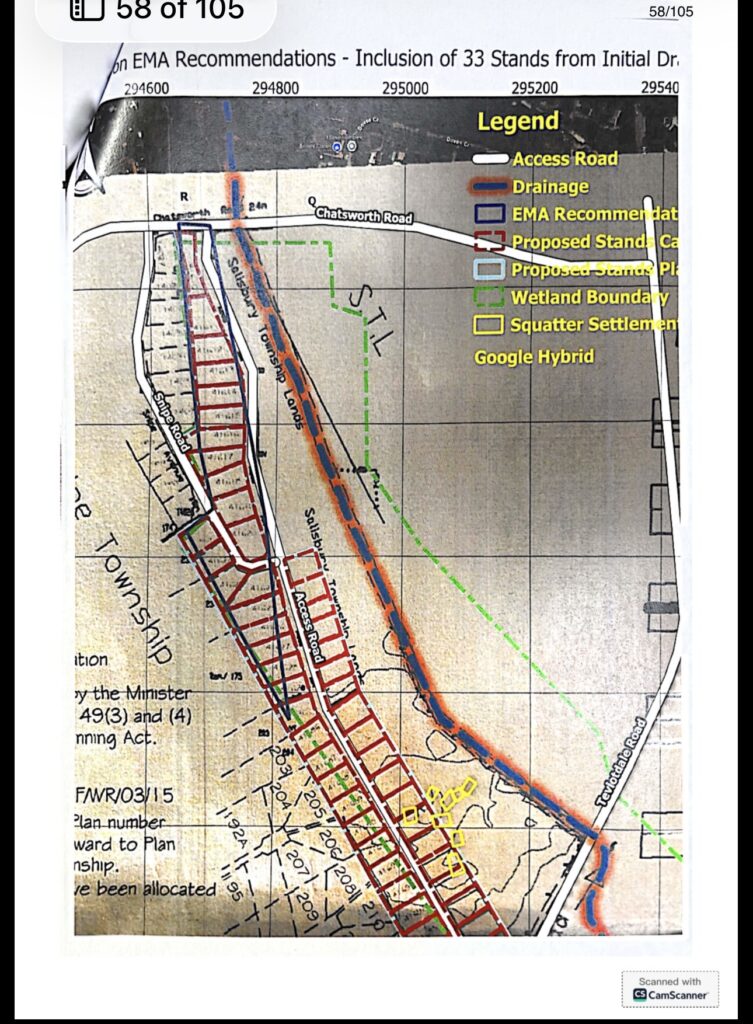
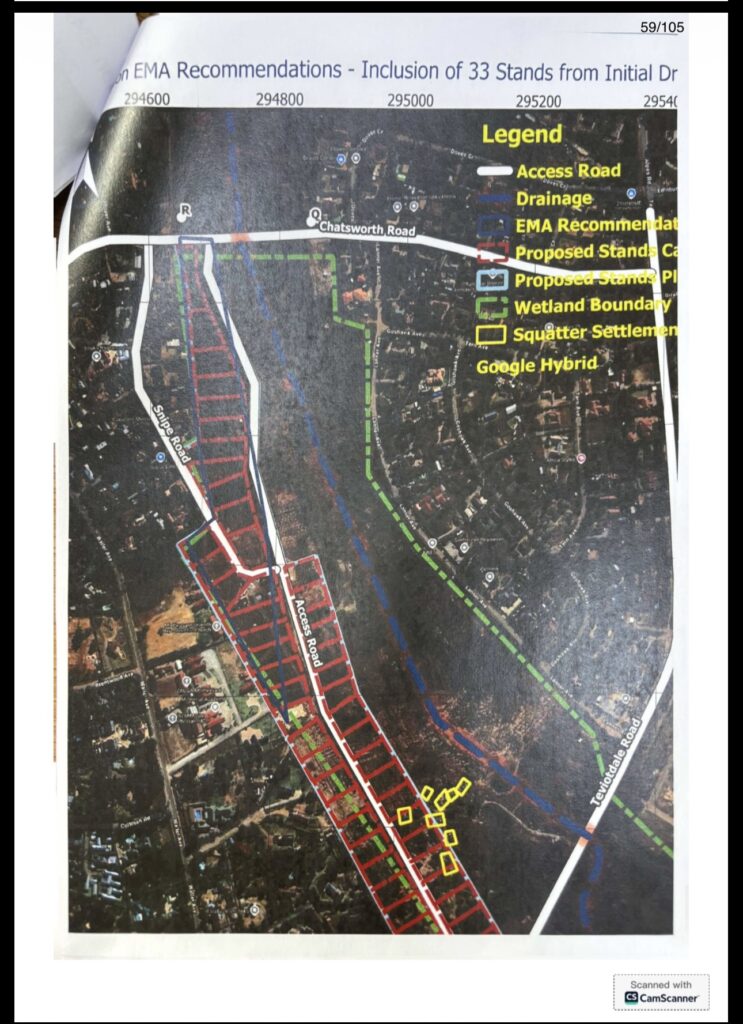
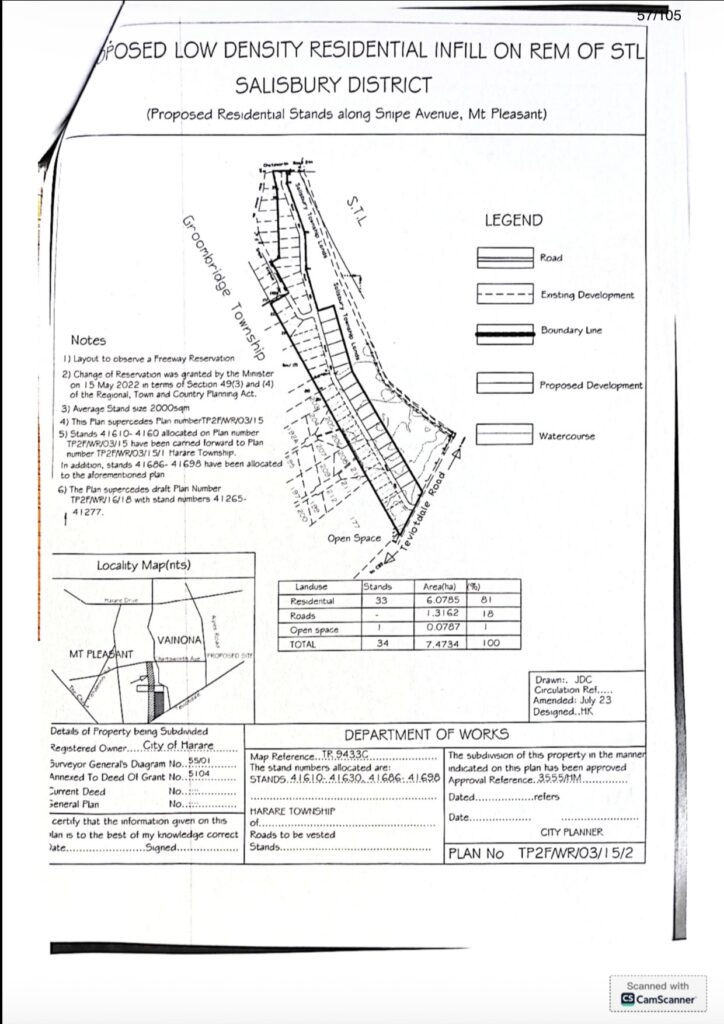
In November 2024, the city’s environmental consultants, Precise Environmental & Geospatial, asked EMA to nearly treble the developable area to 14.425 hectares, adding 33 stands and a road linking Teviotdale Road to Chatsworth Road. The city’s planning drawings had earmarked 54 stands; EMA’s 2021 recommendation allowed 21.
The consultants’ letter said the expansion would also “include existing infrastructure currently being built on some of the 33 excluded stands”, land EMA had never approved. A separate proposal by the consultants, dated 25 November 2024, said the scheme was “progressing with beneficiaries currently building infrastructure on the approved stand allocations”, more than a year before EMA issued its environmental certificate.
The proposal conceded that the scheme “will not solve the housing backlog but will accommodate individuals and families with the capacity to build their dream homes in this prime location”. It also cited rental income from University of Zimbabwe students and floated a nature park or a golf course.
EMA said no. In a letter signed by Chigona and dated 15 December 2025, the agency refused the expansion because the land “falls within a gazetted wetland” and advised the city to consider “low-impact projects” such as picnic gardens and recreational parks. It allowed the access road only “up to the last Stand within the approved area”.
Less than three months later, on 10 March 2026, EMA issued the city an environmental impact assessment (EIA) certificate, Licence No. L10000178245, for housing on the 5.06 hectares.
Birdlife Zimbabwe and Mtetwa however argue that because the 5.06 hectares also lie inside the gazetted wetland, it is “unclear on what basis” EMA approved the development at all.
Records ‘locked in a library’
Mtetwa learned of the project in September, when she came across a public notice for cluster homes on Stand 41618 Snipe Avenue, Mount Pleasant. When her lawyer went to EMA for the records, the affidavit says, “he was advised that the documentation was locked in a library and that no one at the office had the key to the library.”
The bundle EMA eventually released on 8 October did not include the environmental impact assessment report, or the environmental management plan that the certificate requires the developer to follow. Mtetwa obtained the certificate itself through a third party. The applicants argue that if EMA cannot produce the plan, it cannot enforce it.
Ecologist Dr Rob Cunliffe, commissioned by the applicants, concluded that virtually the entire site lies inside the protected area, on a strip between 50 and 200 metres from the wetland’s central drainage line. His report warns that the planned 21 houses, roads and wastewater systems threaten groundwater recharge, flood control and water quality downstream.
“The wetland should therefore be regarded as functioning natural water infrastructure rather than simply as undeveloped land available for conversion,” Cunliffe wrote. He noted estimates that more than half of Harare’s original wetlands have already been lost to development, and recommended that the scheme be moved outside the protected area.
Building on banned plots
The applicants lodged their appeal with the environment minister on 23 October and served it on the city the same day. Work however did not stop. Luni told the applicants’ lawyers he never received the appeal from the city, and neither the city nor Luni responded substantively to letters demanding a halt, the papers say.
Mtetwa returned to the site on 29 October with a camera. Her photographs, geolocated by Cunliffe, record activity at 15 locations, almost all inside the protected wetland.
They show deep trenches dug “all along the edge of the Gwebi stream” outside the licensed area, which “appear to match the stands which were explicitly prohibited by EMA”. They also show soil and rubble dumped on the wetland, newly fenced stands, and a construction vehicle using an entrance from Teviotdale Road which, according to the report, EMA had refused to allow.
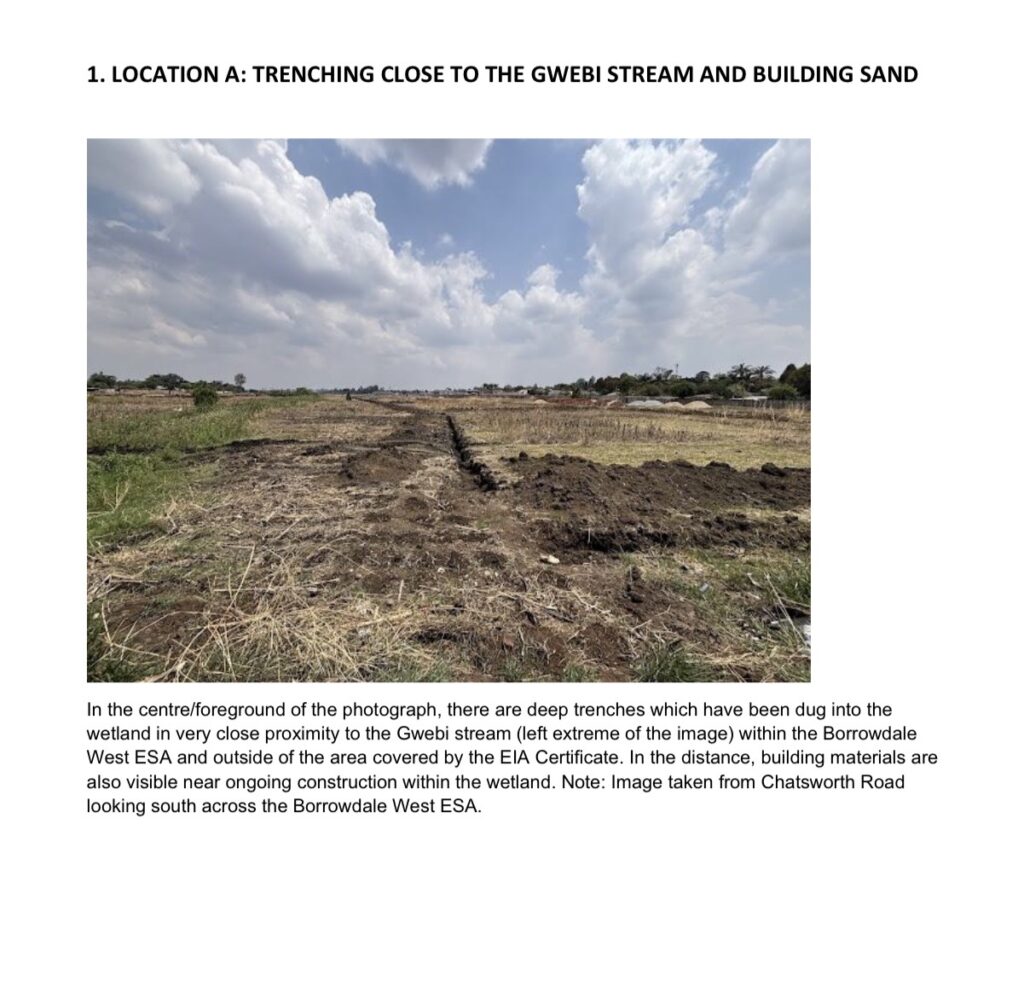
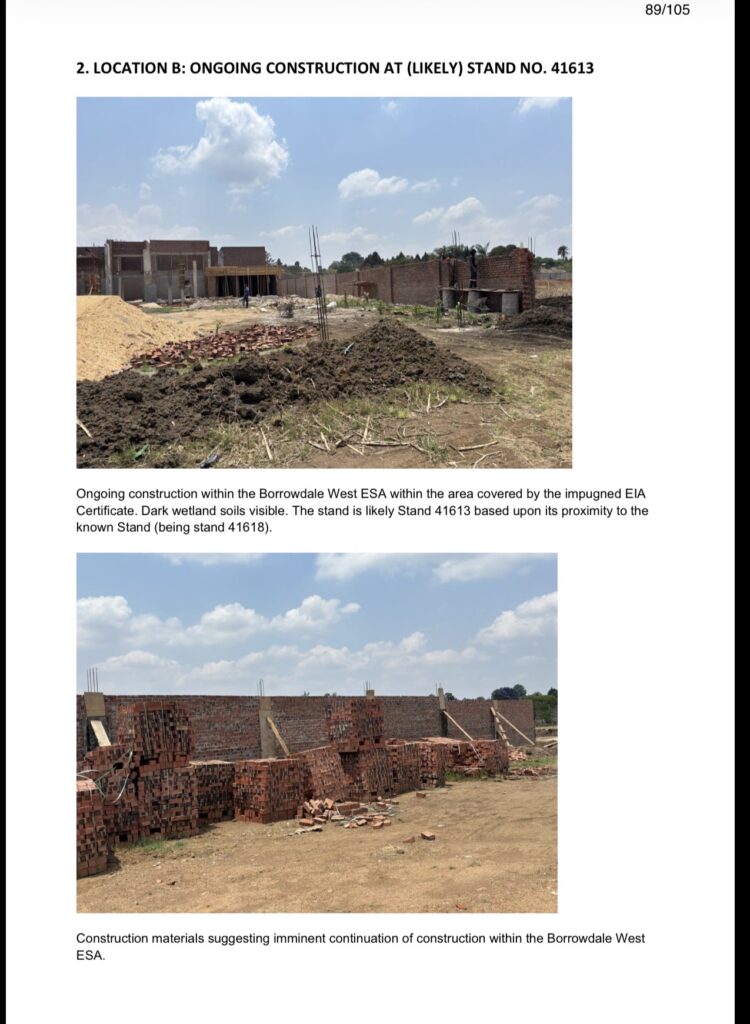
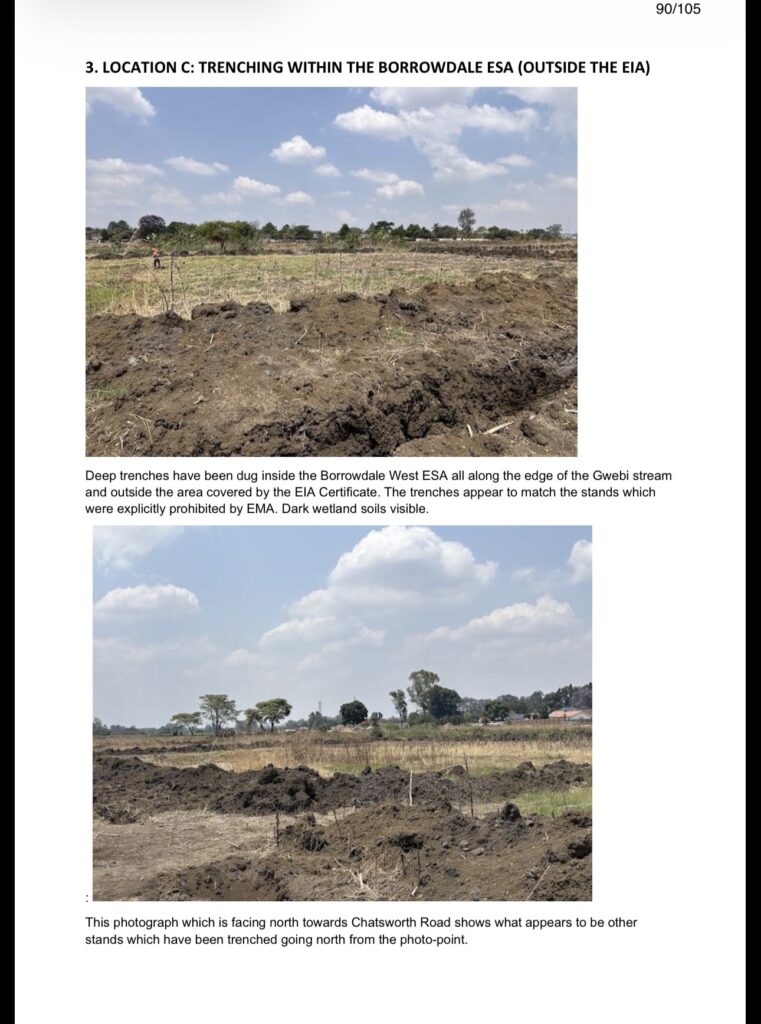
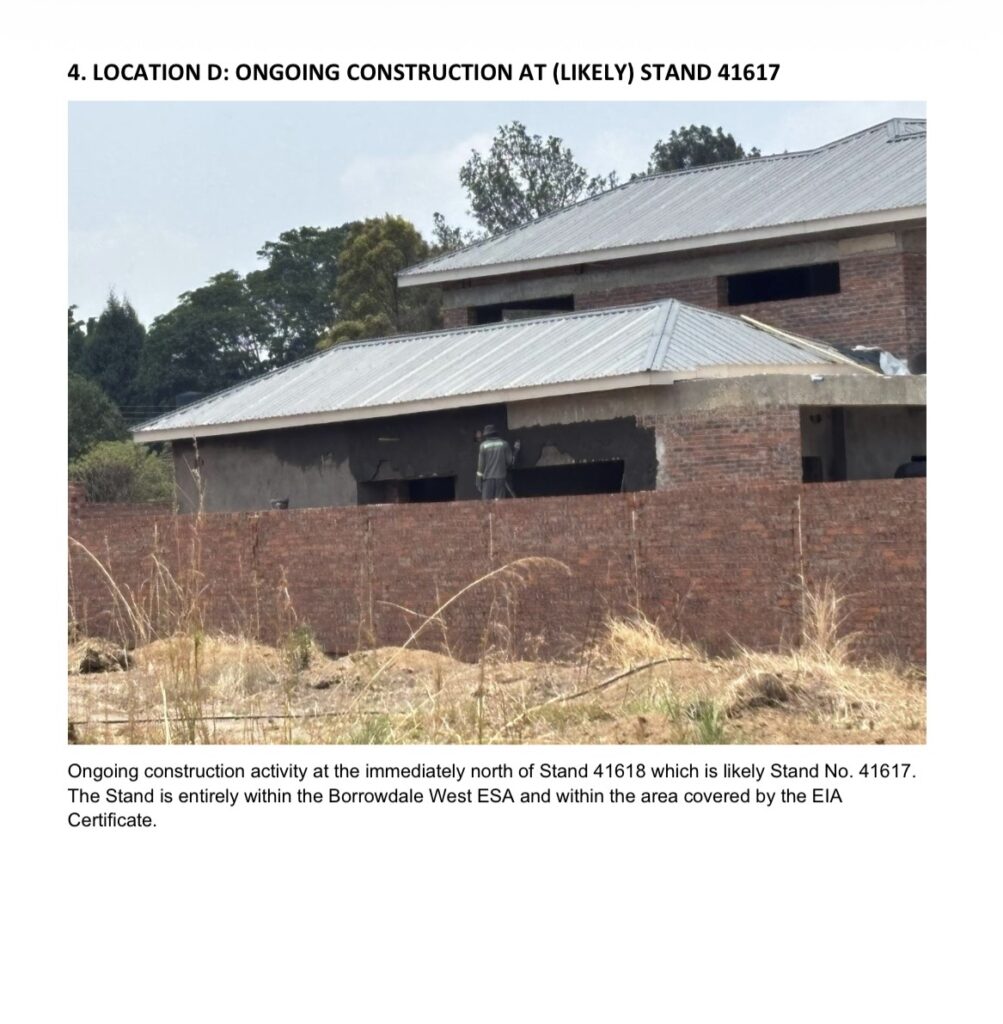
“I confirm that on the 29th October 2026, I physically visited the affected area and I am able to say that despite the lodging of the appeal, work has continued to be done in the area,” Mtetwa says in her affidavit.
She called on the city and Luni to “disclose to the court whether the works outside the area covered by the EIA Certificate are being conducted by them, and if so, on what lawful basis”.
At odds with government policy
Court papers also set the case against the government’s own policies. The National Human Settlements Policy of 2020 states that “no infrastructure development activities are permissible on wetlands”, while the National Development Strategy 2 pledges to protect wetlands “from human activity encroachment.”
Zimbabwe also presides over the global treaty dedicated to saving the world’s wetlands taking over the presidency of the Ramsar Convention on Wetlands after hosting the treaty’s 15th Conference of the Contracting Parties in Victoria Falls in July 2025, a role that places it at the head of an international pact committed to the conservation and wise use of wetlands. Yet at home, the government has been decimating of ecological sensitive areas.
The applicants note that the Ramsar Convention obliges Zimbabwe to plan and promote the conservation and wise use of its wetlands, obligations that weigh all the more heavily on the country holding the treaty’s presidency.
BirdLife Zimbabwe and prominent human rights lawyer Beatrice Mtetwa, who have taken the matter to the High Court, say the irony should trouble the nation. Mtetwa says it would be “a grave indictment on us as a country” if the rapid loss of wetlands, which the government itself has identified as a critical threat, were allowed to continue during Zimbabwe’s presidency of the convention.