 Pachena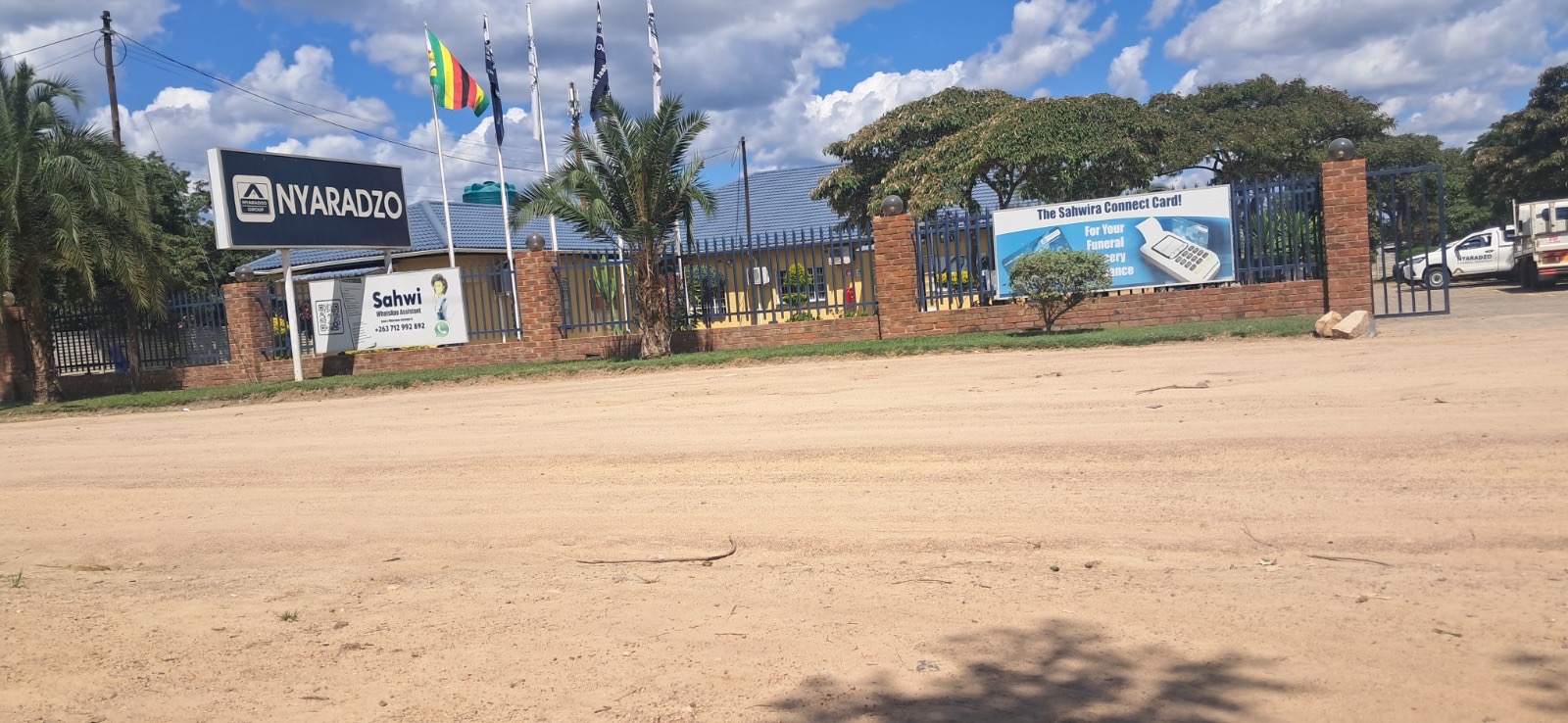
By Brenna Matendere
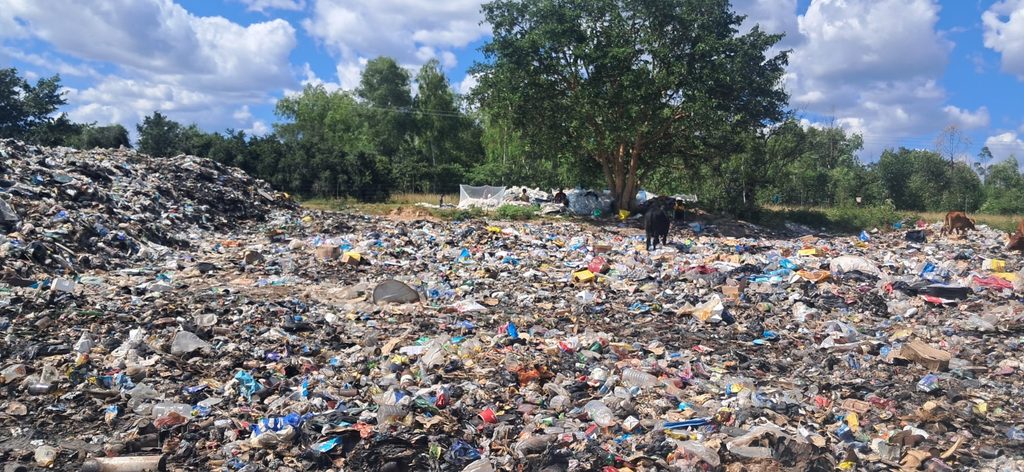
Mhondoro-Ngezi—Residents of Turf in Mashonaland West province’s Mhondoro Ngezi district are up in arms with Nyaradzo Funeral Services over the disposal of hazardous parlour waste in a public dumpsite
Turf town is a modest settlement of roughly 40,000 people, with a handful of banks, grocery stores, beer outlets and backyard industries.
Most residents work for Zimplats, farm small plots or run informal businesses.
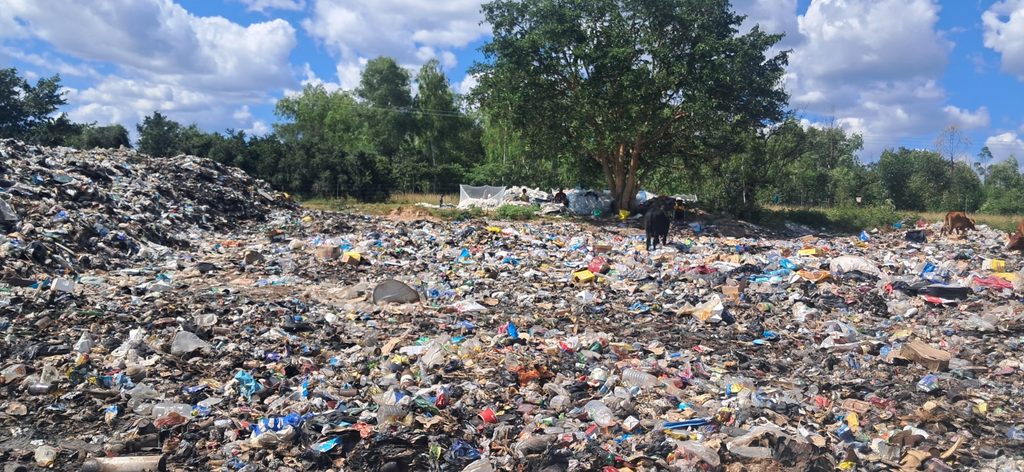
Schools serving hundreds of children sit close to a poorly managed dumpsite at the centre of intersecting dust roads that funnel daily life through it.
And it is here, residents allege, that a company known nationally as a compassionate sahwira (friend) is exposing the community to biomedical waste.
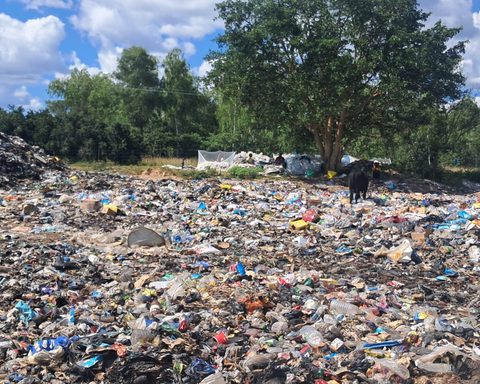
An investigation supported by Information for Development Trust (IDT) found used surgical masks, razor blades, disposable gloves, syringes and cotton swabs scattered across the site.
These materials are typically used in body preparation processes such as washing, embalming and dressing the dead.
Despite community testimonies of alarm and evidence gathered, both the company and the Environmental Management Agency deny that such waste is being dumped there.
Residents say the evidence tells a different story.
“They come with their truck”
Gift Mupimbi, 26, has worked at the dumpsite since November 2025, scavenging plastics for resale and he says, from that vantage point, the pattern is clear.
“We don’t know where they (Nyaradzo) will be coming from with the materials but they usually come in teams of three with their truck. They offload the materials and leave,” he said.
What happens after that worries him even more.
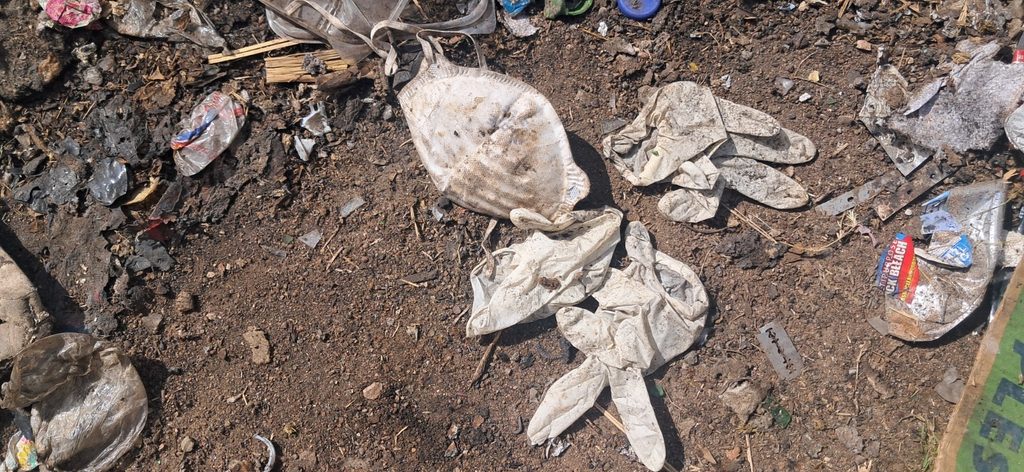
“The children pick the masks to obtain the rubber strings on them which they use to make catapults for hunting birds. Sometimes we chase the children away so they don’t tamper with hazardous materials that can kill them but they come back when they realise we have gone out. They enter the dumpsite through the perimeter fence which is not tight. They are children and pick pretty abiut everything they desire, including harmful things that can kill them,” he said.
The dumpsite is unfenced in parts, allowing both children and livestock to move freely through it. During visits, cattle were seen drinking from fluids seeping out of decomposing waste—animals that often end up sold to local butcheries.
“A big health risk for the kids”
Residents across Turf say they have raised alarm with the authorities repeatedly, with little response.
Marko Mazhambe, from Ward 1, did not hold back.
“We have a number of children from primary schools that are surrounding that dumpsite who are going there to pick and play with the hazardous materials which Nyaradzo is dumping at the Turf dumpsite.
“That is a big health risk for the kids. In Turf, Nyaradzo has a big compound that has a perimeter wall. Why can’t they find a better way to dispose their materials there or alternatively create a separate dumpsite elsewhere in town which they can secure and use?” he asked.
He also pointed at local authorities.
“Our council gets a lot of money from companies like Zimplats and they can easily devise ways for sustainable waste management in this town, like securing the dumpsite or constructing another one far away from people. However, it is surprising that they are failing to solve the situation,” he said.
For parents, the fear is immediate and personal.
Sphiwe Banda, who has lived in Turf for 12 years, described what she sees.
“We have a big grievance against Nyaradzo. They are dumping things like used gloves from their mortuary. This is causing serious problems for our kids. They go and take those gloves and blow them like they were balloons. We don’t know the disease of a person who died and was attended to using those gloves. So imagine the health risks of children putting such used gloves in their mouths,” she said.
Precious Phiri from Chemahewu echoed the concern.
“Most of the times the children will be at school and from there they pass through the dumpsite. We won’t be there to prevent them from doing that. What we then see are the children using rubbers from the masks they would have obtained from the dumpsite to make catapults. It’s a worrying scenario and Nyaradzo is failing us,” she said.
What the science says
Research suggests those fears are not misplaced.
A journal by Pinelopi Petropoulou titled “Environment and Public Health: How the Environment Affects Children’s Health and Quality of Life,” warns that careless waste disposal severely exposes children.
“It affects neurodevelopment and cognitive abilities in children, can trigger childhood asthma and cancer, and can lead to chronic diseases such as heart attacks later in their lives,” reads the journal.
An advisory on the Unicef website adds: “Children living near poorly managed health-care waste sites face a disproportionate burden of disease and long-term harm, as toxic pollution from these facilities damages both their immediate health and the environments they depend on.”
“Moreover, in areas where pathological waste remains untreated, the resulting attraction of flies, rodents and other organisms has been linked to outbreaks of vector-borne diseases, further endangering child health,” adds Unicef.
The US Center for Disease Control and Prevention (CDC) generally warns: “Contact with contaminated tissues or fluids can cause severe health outcomes, including systemic infections, septicaemia and gastrointestinal illness.”
From dumpsite to the pot
The risks extend beyond the dumpsite.
Dr Nyasha Sakadzo, a professor of applied sciences at Manicaland State University, explained the implications of cattle drinking contaminated fluids.
“Embalming fluid is mostly formaldehyde (5-37%), methanol (9-56%), glutaraldehyde and other solvents. Formaldehyde is toxic and carcinogenic: ingestion of even small amounts can cause severe gastrointestine injury, organ failure and death; chronic exposure raises cancer risk.
“If cattle drank such waste at dump sites, residues could accumulate in tissues. There’s no direct study of beef from that scenario, but the chemicals are not food-safe and would pose acute poisoning risk and long-term cancer risk to consumers,” he said.
He added: “Cemetery/leachate studies note that embalming chemicals, heavy metals, pathogens and organics can migrate into soil and groundwater. Formaldehyde breaks down faster than metals, but heavy metals and other organics persist and can be taken up by crops. Eating produce from such soil may expose people to: Formaldehyde/methanol residues cause gastrointestine, neurological and cancer risks”.
The law is clear
Zimbabwe’s legal framework leaves little ambiguity.
Under the Environmental Management Act (Chapter 20:27), “no hazardous waste shall be disposed of at any other place except in a licensed hazardous waste disposal site or landfill” and any person who disposes such poisonous items must ensure that there are mechanisms to protect the site from seepages or exposure while the dumped items must be separated from general waste.
The Public Health Act (Chapter 15:17) adds: “Every person has the duty to…exercise due diligence and take reasonable precautions under their control to avoid, control or mitigate a public health risk…”
Nyaradzo denies dumping
In response, Nyaradzo maintained that it follows proper procedures, insisting that it was handing over parlour waste to the council clinic for disposal
“Our Turf branch has been using the council-designated dumping area for disposal of non-hazardous waste, not pastures or areas accessible to livestock. We operate in accordance with council guidelines and regulations, and our waste disposal activities are monitored and subject to regular inspections by council authorities.
“Regarding medical waste, we deposit these at the council clinic, where they are incinerated at Donain. We do not dispose of such waste in landfills or areas that could pose a risk to the environment or public health.
“We take environmental responsibility seriously and are committed to maintaining best practices in waste management. We appreciate your diligence in seeking our response, as we value the role of responsible reporting and appreciate your interest in understanding our processes. Environmental care and compliance remain central to how we operate.”
The parlour, however, did not indicate if it monitored the reported disposal of the waste by the clinic.
Mhondoro-Ngezi Rural District Council chairperson, Epraim Pepukai Chengeta. referred all questions to the local authority’s chief executive officer, Itai Mawonde.
But Mawonde said his subordinates had not briefed him on any waste management issues at the Turf dumpsite. “I am not aware of the matter. No-one has told me about it,” he said.
EMA admits gaps
The Environmental Management Agency (EMA) also dismissed the claims.
“The Environmental Management Agency carried out an inspection at the Turf Town dumpsite in Ngezi under Mhondoro-Ngezi district in Mashonaland West province and there was no evidence of biomedical waste in the form of surgical masks and razors as indicated in your enquiry.
“The Agency is not in receipt of any such reports or has any such waste been noticed during the statutory monitoring visits the agency carries out regularly at the dump site,” said EMA in a written response to media questions.
But the same response acknowledged serious flaws.
“However, the dumpsite is partially fenced allowing access by livestock and unauthorised people. The dumpsite is also poorly managed by the local authority.”
“Medicinal waste is classified as hazardous waste, and the Environmental Management Act (20:27) mandates use of approved methods of treatment including incineration as well as avoidance of practices that allow toxic or infectious exposure. Practices such as open burning or dumping generally violates these standards and offenders are liable to prosecution,” EMA noted.
The Health parliamentary committee acting chairperson, Discent Collins Bajila, urged EMA to heavily penalise Nyaradzo if found guilty.

“If it’s indeed the case, then EMA will have to bill them to the fullest. Any form of environmental pollution must meet full penalties from authorities,” he said.