 Pachena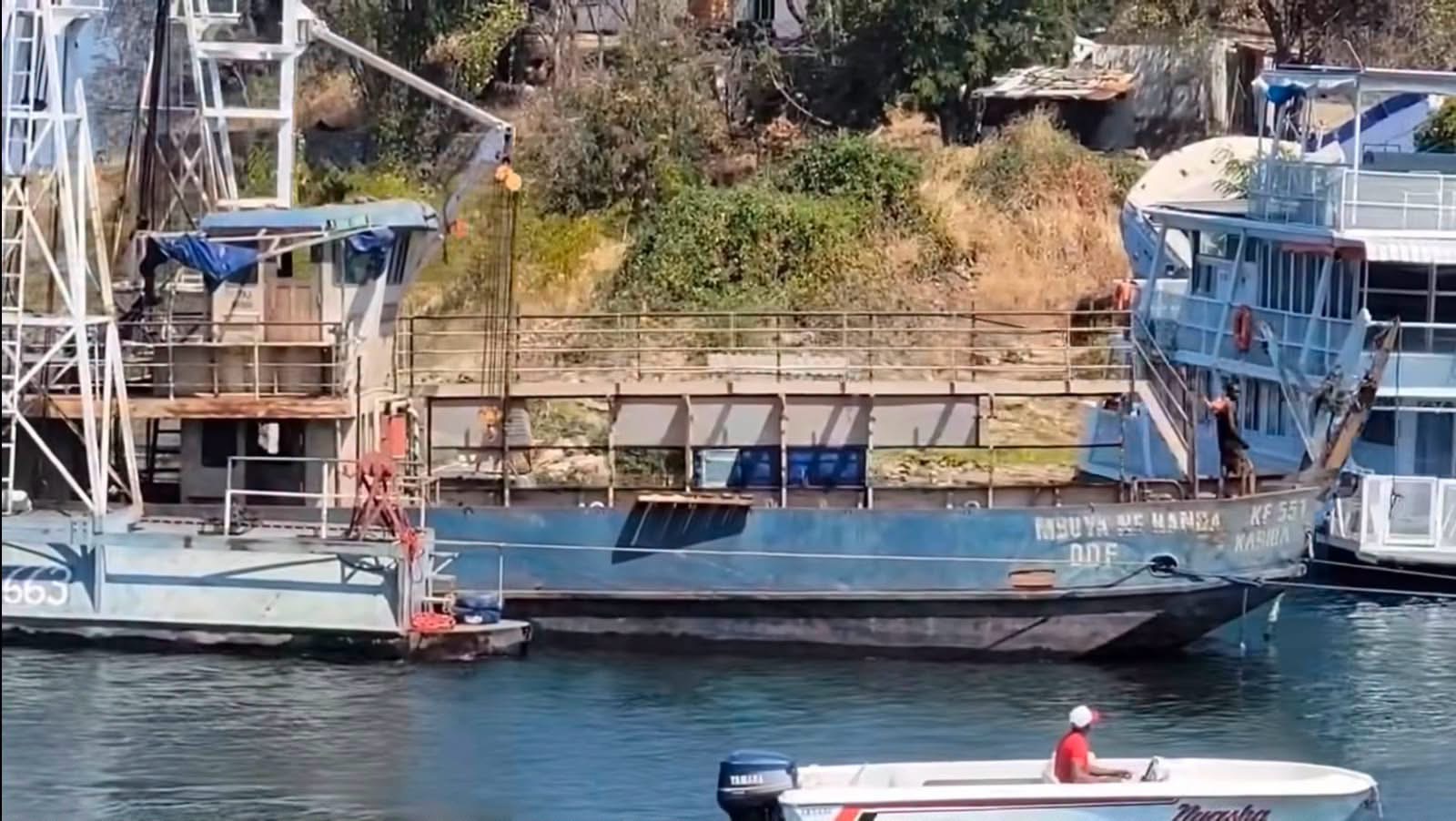
By Brenna Matendere and Ruvimbo Muchenje
- Engineers told the Kariba Lake Captain and RIDA the aged Mbuya Nehanda ferry needed two extra pontoons to stay afloat.
- In 2021, the Chief Secretary in the Office of the President and Cabinet was told the Mbuya Nehanda ferry was suffering constant breakdowns.
- Passengers survived a near-capsize in December 2024 and February 2026.
- An electrical engineer and several people warned the government of an impending disaster in February 2025. Nothing was done.
- Kariba Member of Parliament warned RIDA of a possible disaster in February 2026.
- On 11 August, at least 97 people died in Zimbabwe’s worst transport disaster – and ministers blamed the dead captain.
- Transport minister Felix Mhona was informed that the ferry was unseaworthy during a fact-finding mission after the disaster struck.
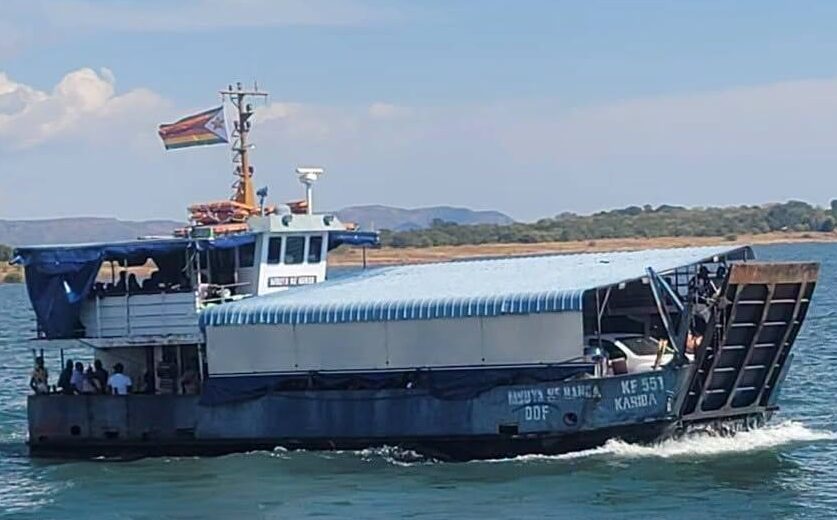
Zimbabwe’s Mbuya Nehanda ferry that capsized on Lake Kariba on 11 August, killing at least 97 people, should never have been on the waters of Kariba. Engineers had earlier written to the government warning that the vessel was craving structural attention to improve its stability.
The Kariba Lake Captain Adam Nyekete confirmed receiving their warnings in a 16 August 2026 meeting with Transport and Infrastructural Development Minister Felix Mhona. This revelation peels back the government’s earlier account putting the blame for the tragedy solely on the late Mbuya Nehanda ferry captain Sign Patsikadova.
A week after the tragedy, Local Government Minister Daniel Garwe told a post-cabinet briefing in Harare that responsibility for the disaster lies squarely with Patsikadova who ignored adverse weather warnings.
Boat operators confirm strong winds and waves were coming from the Binga direction and that the Lake Captain had advised operators to avoid the water. Garwe also insisted that the ferry had been certified fit for service by the Ministry of Transport and Infrastructural Development.
However, Pachena’s investigation found that the Mbuya Nehanda had a long history of mechanical, structural and operational problems, many of which were known to officials, boat operators and people who regularly used the ferry before it sank.
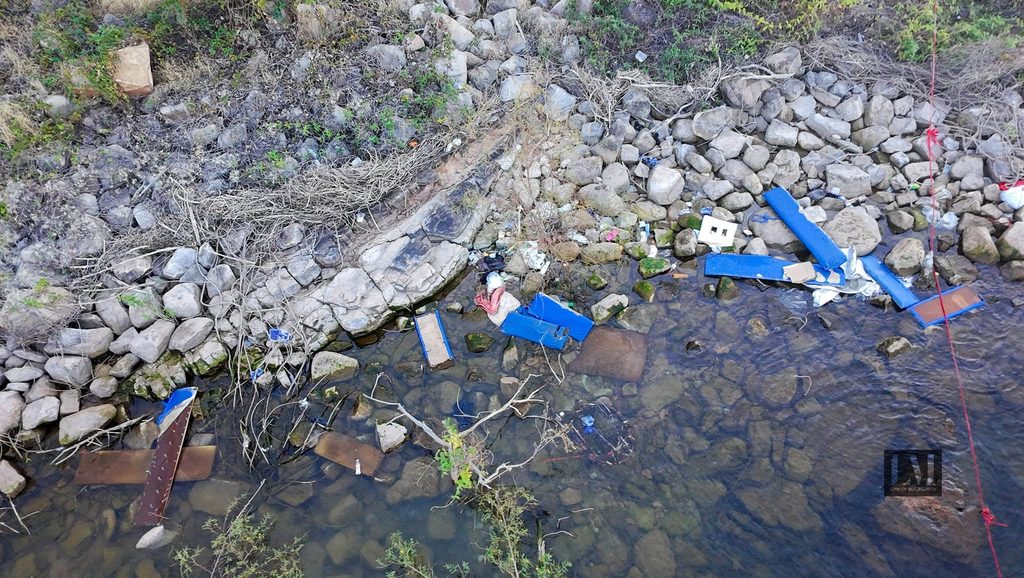
The disaster is now the subject of a Commission of Inquiry.
The Mbuya Nehanda (KF551), operated by the state-owned Rural Infrastructure Development Agency (RIDA) which is under the Office of the President and Cabinet (OPC), was used as a means of transport by communities living in remote parts of Kariba. Villagers, fishermen, traders, teachers and nurses used the water route because it is far shorter and cheaper than the road. The crossing from Kariba to Mola for instance took between six and seven hours at a cost of about US$15 using the ferry but the same distance costs US$30 and up to two days by road.
Until the Kariba tragedy, the Nyanga bus disaster, which claimed 89 lives in 1991, was the deadliest transport disaster ever recorded in Zimbabwe.
The vessel was also overloaded when it capsized.
Government says the boat had an approved capacity of 95 passengers and crew members in total but it was carrying at least 174 people when it capsized.
Police have confirmed that 97 bodies have been recovered while 77 people were rescued. The exact number of people who were on the ferry is yet to be established. In their initial press statement issued hours after the disaster the police indicated the ferry was carrying 90 passengers and five crew members. The bodies recovered so far, as well as the number of those rescued, however confirm that the ferry was carrying at least 174 people, along with heavy cargo, when it capsized.
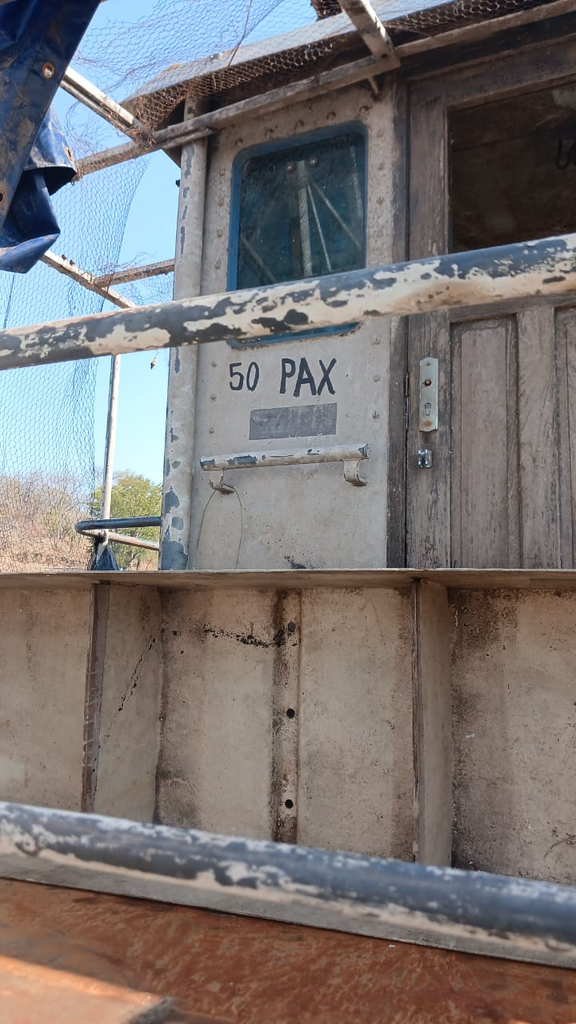
Sources in the tourism industry in Kariba however say the ferry’s original capacity of 95 people was reduced to 50 after the vessel’s engines failed in 2024. The boat almost capsized in December 2024 shortly after leaving Peters Point, a harbour and ferry terminal on the southern shores of Lake.
When the wreck was pulled ashore on August 25, 2026, it was marked 50 PAX (passengers), appearing to confirm information from sources that the ferry’s capacity had been reduced.
Warning from engineers and the pontoons that were never fitted
Pachena established engineers from KB Engineering, who serviced the ferry repeatedly wrote to Lake Captain Nyekete and RIDA outlining areas that needed to be fixed to make the Mbuya Nehanda vessel stable. Their central recommendation was that two extra pontons should be fitted on the vessel.
The engineers’ warnings surfaced on 16 August, when Mhona held a closed-door fact-finding meeting with boat operators and other stakeholders at Pat McLean Hall at Kariba Heights. The minister, urged boat operators and other stakeholders to speak freely about the causes of the accident.
Cephas Shonhiwa, the administrator of the Kariba Business and Tourism Indaba, told the minister that the ferry was not fit for purpose.Shonhiwa, a central figure in Kariba’s tourism industry, who oversees a travel association of 141 company members operating from the resort town of Kariba, to Binga upstream and
Kanyemba downstream, said he contacted the engineers who worked on the Mbuya Nehanda following social media claims about its servicing history. The engineers confirmed writing to the Lake Captain on several occasions, listing the work required to make the vessel safe.
Fitting two additional pontoons was among their recommendations.
After Shonhiwa spoke, the minister said: “Before we can proceed to take any other hand that is up, Lake Captain, confirm you received these letters that are being spoken about here.”
Nyekete confirmed receiving the letters.
When Pachena contacted Nyekete, he referred questions to his superior in Harare . “I am not allowed to speak to the media. I am a junior civil servant. You need to speak to my director,” the Kariba Lake Captain said.
The Lake Captain is a senior official within the Ministry of Transport and Infrastructural Development, specifically under the Department of Inland Waters Control, in charge of safety enforcement. His primary roles include ensuring that all vessels- houseboats, fishing rigs, and ferries like Mbuya Nehanda comply with the Inland Waters Shipping Act. This includes checking for safety, such as the fitness of the boat, equipment like life jackets, fire extinguishers, and functional communication radios.
On his part, Shonhiwa confirmed that he had indeed told the minister that the ferry was not fit for service.
“What I said in the meeting is that our engineers (KB Engineering (Pvt) Ltd) made known to RIDA and the lake captain that for the Mbuya Nehanda vessel to carry people to its full capacity it needed to have proper voyance and stability while navigating,” he said.
Minister Mhona acknowledged that the closed-door meeting had indeed taken place. He, however, declined to give details on what was discussed.
He told Pachena: “Government has directed there be an inquiry and I think let us be guided by this process”
Pachena contacted Keith Baleyntine, director of KB Engineering, to verify the work his company carried out on the Mbuya Nehanda. He was evasive: “There is a board of enquiry set up. I can’t speak about that,” he said, before ending the call.
Acting RIDA District Head for Kariba manager Ignitius Chiome, who also attended the meeting, said he was not authorised to comment “on anything regarding that issue.”
Chiome has since been arrested on culpable homicide charges over the incident. He appeared in court on 26 August. He is out on bail.
Zimbabwe’s Director of Inland Waters Control Lameck Chitenga confirmed to Pachena that Shonhiwa had pointed out that engineers had written to the Lake Captain expressing concern about the vessel’s defects.
“The Lake Captain (Nyekete) told the minister during the meeting in Kariba that he had seen the letter from engineers warning that the mechanical fitness of the Mbuya Nehanda vessel needed to be improved. However, even though the lake captain confirmed that he saw the letter from the engineers, I am yet to receive it. Maybe they will send me a copy,” he said.
Despite this, Chitenga said he disagreed with the engineers’ assessment.
“Secondly, during the meeting, Mr Shonhiwa said that the engineers who refurbished the Mbuya Nehanda vessel recommended that two additional pontoons were supposed to be fixed on the vessel to improve its flotation. However, I want to point out that I do not agree with this version. I say so because the vessel, even up to now, it has not sunk completely in the lake. It is still floating,” he said.
He appeared to shift responsibility for the matter onto the captain.
“The Mbuya Nehanda vessel has been operating since 1985 and has never encountered a problem,” he said.
“I want to believe that the vessel capsized because of a navigational error by the deceased captain. It could be that the captain wrongly entered a wave, and it hit the boat on its side. The wave must not hit the boat sideways.”
He added that the captain was supposed to “enter the wave directly or ensure it’s always on the back of the vessel. Full details will only be known after the investigation that is currently underway,” Chitenga said.
The Director of Inland Waters Control is primarily responsible for the safety, regulation, and administration of the country’s navigable water bodies. He is also responsible for safety surveys and inspections to ensure that vessels are seaworthy and equipped with safety gear.
RIDA Director General, Christopher Shumba, insisted that the ferry was seaworthy and dismissed the engineers’ recommendations as mere “speculation.”
“What I know is that the boat went through regular service by people who were used to working on it for a long time,” he said.
“It’s like a person coming to you and saying your car is not roadworthy, yet they are not from the VID (Vehicle Inspectorate Department). How can we perhaps listen to the advice of people who may have fixed it but were not from our department?”
Shumba however acknowledged that the ferry had engine problems but said the problem was rectified.
“In fact, we conducted a complete overhaul of the engines and replaced them with new ones we bought from overseas,” he said.
A boat that had been trying to sink for years
The Mbuya Nehanda’s problems began years before it finally sank on 11 August 2026.
In 2021, Chief Secretary in the OPC Martin Rushwaya, then the deputy chief secretary, was told the Mbuya Nehanda ferry, alongside Chaminuka and Nyaminyami vessels, were suffering constant breakdowns and high operating costs. The three vessels, built by Struer Shipyard in Denmark, started operating on Lake Kariba since 1985.
In December 2024, the ferry nearly capsized. Operators told Pachena that it had another serious incident in February this year.
The ferry’s boarding ramp broke away from the vessel and fell into the lake, putting passengers at risk. Passengers called for help, and witnesses said there were inadequate life jackets for everyone on board.
The February incident prompted Kariba legislator Shine Gwangwaba to raise safety concerns with RIDA. He told Pachena that he led the Constituency Development Fund Committee in a meeting with Chiome and other RIDA officials.
Gwangwaba said he suggested that RIDA provide smaller boats and at least two speedboats so they could rescue people in the event of a disaster.
“They (RIDA) said they had no money to address all issues at once but would look into my recommendations,” Gwangwaba said.
He said the committee also asked RIDA whether it was working closely with teams monitoring weather conditions on the lake and with the Kariba district emergency preparedness unit.
Gwangwaba would later lose 16 relatives, including his sister, when the Mbuya Nehanda sank. His version of events corroborates information provided by engineers.
However, Shumba said RIDA was not legally required to have tender boats or other small boats attached to larger vessels for emergencies.
“If the authorities have not seen it fit that we should do that, we have no obligation of having tender boats on big vessels,” he said.
He also questioned Gwangwaba’s ability to assess the ferry’s mechanical condition because he was not an engineer.
The public warnings that came to pass
Gwangwaba was however not the only person to issue a warning,
On 15 February 2025, electrical engineer Norman Sianjeme warned Information Secretary Nick Mangwana on X that the Mbuya Nehanda ferry and other RIDA vessels were old and needed major repairs, warning that “otherwise it’s a disaster waiting to happen.”
The warning came after Mangwana announced that RIDA had cut ferry fares, a move he said had brought relief to travellers who rely on the boat to reach remote areas of Nyaminyami District.
Several X users echoed the warning, telling Mangwana that an accident and loss of life were inevitable, as shown in the screenshots below. After the tragic accident occurred, many of these users returned to Mangwana’s post, saying he and the government had ignored the warnings and bore responsibility for the deaths.
Boarding this archaic boat is just dicing with death
— Kanu Kanu (@ka82nu) February 15, 2025
That boat is tired it needs to rest or it will not go down alone
— DaddyBlue (@ismailOctopus) February 15, 2025
Manje kaaa those who use this boat have no access to this information. Plus chazosakara manje, since 1980 tichingoshandisa 1 boat… One day umwe ano perera muna Zambezi
— P. Reuben CFC (@sirmiles1254) February 15, 2025
Chinomboendawo padry dock chiferry chenyu ichi? When was it last serviced? The paint tells a lot abt the safety of this thing? How does this this pass the inspection? Rust kunze kuzoti mareas ari under water! Plse take action now. Don’t wait for disaster
— Zaka East Constituency (@NhavaYangu) February 16, 2025
This rusty thingy is gona kill people
— Chief Keef (@iamlkonde) February 15, 2025
Its gonna kill people, overloading and wear n tear, in a normal country that thing would have been scrapped
— SnakeUnderGrass (@snakeundergras) February 16, 2025
That’s a Death trap, that vessel is in terrible shape, how can you allow such a vessel to continue putting lives at risk. Anyone who boards such a vessel is either desperate or does not value their life.
— Mr Mash (@RastaGmash) February 15, 2025
Cut capacity, packed decks
Survivors who spoke to Pachena described routine overcrowding on the Mbuya Nehanda ferry, particularly at the beginning and end of school terms, when more than 200 people could be squeezed onto the vessel.
They said modifications to the vessel introduced fresh dangers. Seats were welded around the cargo area, leaving passengers sitting among fish, ice blocks, cement and vehicles.
The original design placed the captain on the upper deck with a clear view of the deck below, so that he could watch how cargo and passengers were distributed and judge the boat’s stability. A later modification added a roof that blocked that line of sight.
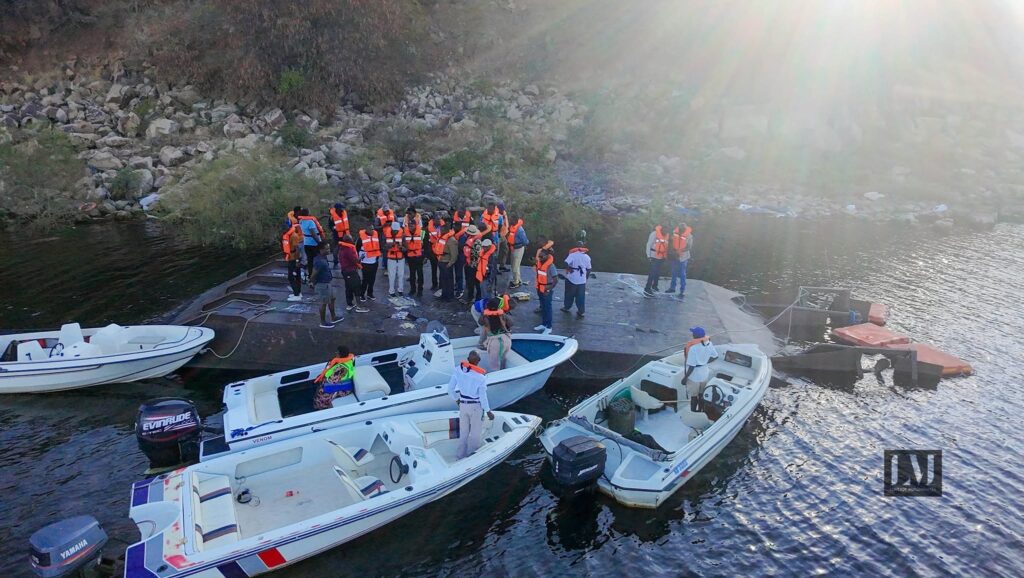
Life jackets were stored beneath the passenger seats, hard to reach in a crisis. For those wedged among cargo on the lower deck, reaching them was harder still.
No briefings, no scales, no reliable count
Survivors and regular ferry users described a service where basic safety procedure had all but disappeared.
There were no routine briefings and no demonstrations of how to use a life jacket. On the morning of the disaster, the only message on RIDA’s WhatsApp platform was that the ferry would reach Kings Camp at midday.
The instruction given on board, surviving passengers told Pachena, amounted to little more than being told to get in and sit down.
Passengers say cargo was weighed by estimation, judged by feel rather than by consistent use of scales.
Passenger records were in shambles. Luggage was logged and paid for, but children were not reliably counted. Heads were tallied from a distance and never checked against the number of people actually on board. Authorities said the number of children aboard was unknown because those below ticketing ages were not included in passenger estimates
As a result, the precise number of people who were on the Mbuya Nehanda‘s ill-fated 11 August voyage is unknown.
Prior to the August disaster, RIDA issued a notice to passengers on 22 July, asking passengers to give correct names when buying tickets so they could be traced in an emergency. The notice said the ferry was fully insured. Tickets examined by Pachena carry spaces for children’s details but regular passengers were routinely left blank.
‘The water reached my knees’
What those failures meant became clear on the water.
Current Siakaluma, an experienced fisherman who survived the disaster, says he watched water coming into the ferry for about three hours, until it reached his knees.
He climbed to the upper deck to alert the captain. Nothing was done.
Taiwona Kamuto, who joined the rescue after the ferry capsized, said 15 of the people he pulled from the water had no life jackets. Kamuto, interviewed by journalist Maxton Kanhema on 17 August, was the first person to respond to the disaster.
One of the survivors, Tendai Machamacha had no life when the ferry went capsized, but found one floating beside him.
While survivors told Pachena the life jackets provided were not enough, Shumba insisted that the vessel had adequate life jackets. He said some life jackets may have been lost during a stampede. Passengers confirmed there was a stampede for life jackets when the vessel hit trouble.
“We are talking of an accident involving many people, some children and adults. There was obviously commotion which disturbed orderly distribution of the life jackets. The issue of overcrowding will be established by the full investigation underway,” he said.