 Pachena
By Brenna Matendere
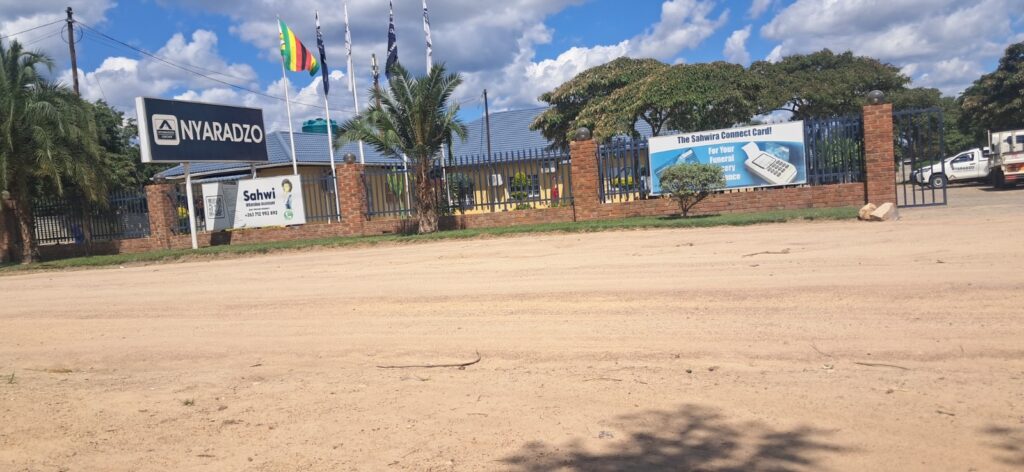
Mhondoro-Ngezi Rural District Council has made an arrangement with Nyaradzo Funeral Services company to periodically collect its hazardous waste that used to be dumped at Turf dumpsite, for safe disposal at Donain incinerator near Kadoma.
A monitoring mechanism by the RDC is also now in place.
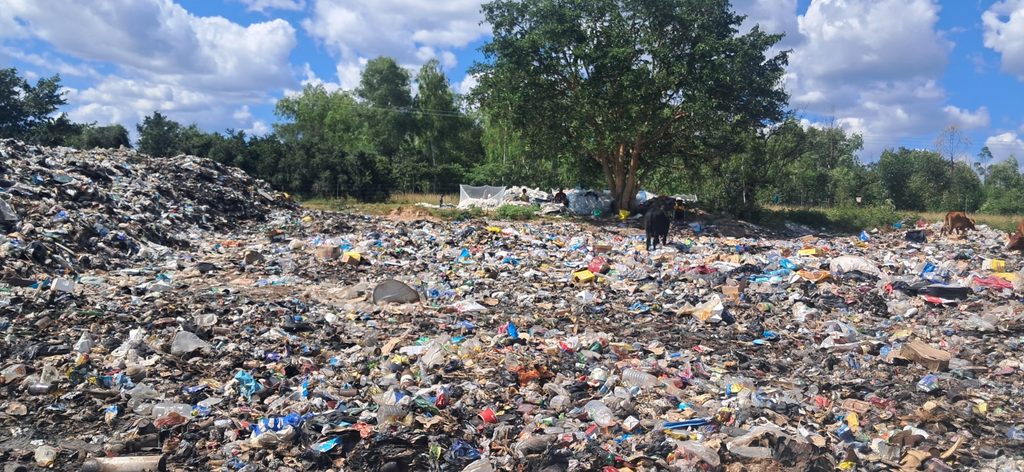
The arrangements were made after the RDC engaged Nyaradzo Turf branch following an outcry by residents that the funeral services company was exposing children to public health risks by dumping its parlour waste at an open dumpsite.
The development follows findings established by an investigation supported by Information for Development Trust which revealed that Nyaradzo has been dumping parlour waste materials at the dumpsite.
In a follow up investigation, Mavis Mhlanga, the Mhondoro Ngezi Environment Officer confirmed that the RDC had held a meeting with Nyaradzo personel at the company’s Turf branch and agreed on an arrangement where the council will now collect the waste for safe disposal.
She said it was wrong that Nyaradzo was dumping its hazardous waste like Personal Protective Equipment (PPE) such as gloves and face masks at the Turf dumpsite but revealed that a solution has since been found.
“They should have been sending PPE to the local clinic for disposal. Corrective action has been taken for them to redirect PPE disposal to Turf clinic.
“Sharp Waste- suture needles, blades will be securely stored at the parlour then transported for incineration at Donain. At the Donain incinerator,” she said.
Mhlanga revealed that the RDC shall be monitoring Nyaradzo to ensure they comply with the arrangement.
“A mechanism for monitoring the agreed arrangement is now in place. We shall be taking it upon ourselves to ensure that all hazardous materials are collected and safely disposed at Doneni incinerator,” she said.
Before the latest arrangement was finally put in place, Mhondoro-Ngezi RDC visited Nyaradzo Turf branch on Monday 27 April to engage the company over the matter but could not have a conclusive engagement as one of the bosses was absent due to a bereavement.
Sources who spoke to this publication said lately, Nyaradzo trucks which used to dump waste at the Turf dumpsite had since stopped.
“We have not seen the Nyaradzo truck going to the dumpsite this week and we hope that such a situation can continue to save our children who have been going there to collect their materials and play with them,” said Marvelous Mabuto, a resident in Turf.
The residents said the dumpsite is yet to be secured.
“There is still a porous fence around the dumpsite and noone has come to secure the place yet. The children are still going there to pick whatever they find,” said Tito Mawere, another resident of Turf Town.
Mhondoro-Ngezi RDC chief executive officer Itai Mawonde said fencing of the dumpsite is work in progress.
“We always try to secure the area but our challenge is still that people go there to steal the fence. However plans are there to secure the area again,” he said.
In our initial investigation, it was discovered that Nyaradzo which offers its services to a community of about 40 000 people in Turf Town, according to 2022 census, dumps its biomedical waste materials at the public dumpsite which is not secured.
The dumpsite is located in a 100 meter radius of primary schools. There is Hwanga primary school and nearby Turf Primary school to its northern side.
Close by and on the southern side of the dumpsite is Ward 11 which has villages one, two and three with dense population.
During a visit to the dumpsite, waste biomedical materials dumped by Nyaradzo were found.
They included surgical masks, razor blades, disposable gloves, syringes and cotton swabs.
In a funeral parlor, these materials are used for preparing the deceased for viewing or burial. Surgical masks are usually used to keep staff safe from potential infections or bodily fluids. Cotton swabs are for applying embalming fluids or cleaning hard-to-reach areas.
Disposable gloves protect staff from bodily fluids and chemicals while razor blades are for shaving the deceased, part of grooming for viewing. Syringes might be used for injecting embalming fluids or other preservation methods.
During direct observations at the dumpsite, a herd of twelve cattle was drinking fluids that were flowing from decomposed materials and it was noticed they gain access into the place because it has no gate. Often, the beasts are consumed by villagers as beef after being sold to butcheries across the small town.
The dumpsite is located near grazing pastures frequented by heardboys some of whom are of school going age.
The dumpsite is particularly at the centre of an intersection of dust-roads that lead into communities.
During the visit, fluids were also seen seeping from points near the discovered waste biomedical materials into Nwazana river which is to the south of the dumpsite and located in Ward 1 of Mhondoro-Ngezi.
Researches show that some key health risks that can be encountered by children exposed to biomedical waste materials include infection transmission from bacterial, viral, fungal; chemical toxicity like latex allergy and respiratory issues from inhaling particles or chemicals from the used gloves.
A Journal by Pinelopi Petropoulou titled “Environment and Public Health: How the Environment Affects Children’s Health and Quality of Life,” outlines health problems that can be faced by children exposed to used biomedical materials at waste collection points.
Dr Nyasha Sakadzo, a lecturer at Manicaland State University of Applied Sciences outlined problems that can result from eating beef from cattle that drink fluids from funeral parlours as witnessed at Turf dumpsite.
“Embalming fluid is mostly formaldehyde (5-37%), methanol (9-56%), glutaraldehyde and other solvents. Formaldehyde is toxic and carcinogenic: ingestion of even small amounts can cause severe gastrointestine injury, organ failure and death; chronic exposure raises cancer risk.
“If cattle drank such waste at dump sites, residues could accumulate in tissues. There’s no direct study of beef from that scenario, but the chemicals are not food-safe and would pose acute poisoning risk and long-term cancer risk to consumers,” he said.
He added that methanol causes blindness/organ damage, and glutaraldehyde is also toxic.
“In practice, contaminated animals would be unsafe for food,” said Dr Sakadzo.
Turning to soil contaminated with funeral-home fluids used for farming, Dr Sakadzo said:
“Cemetery/leachate studies note that embalming chemicals, heavy metals, pathogens and organics can migrate into soil and groundwater.
“Formaldehyde breaks down faster than metals, but heavy metals and other organics persist and can be taken up by crops. Eating produce from such soil may expose people to: Formaldehyde/methanol residues cause gastrointestine, neurological and cancer risks; heavy metals (e.g., lead, mercury, Cd) leading to kidney damage, neurotoxicity and cancer.